As design professionals, your work shapes the spaces where people live, work, and gather. Spaces that are as thoughtful and enduring as the materials within them.
Faux leathers can now offer many compelling sustainability benefits, from bio-based content to innovative, lower-impact compositions. But specifying sustainable faux leather goes beyond a single measure…
Each material presents a different set of trade-offs.
Our goal is to help you with a considered approach where performance, chemistry and lifecycle impact are evaluated together.

Sustainability in Faux Leather
Sustainability in faux leather upholstery refers to its ability to balance environmental responsibility, durability, and practicality while meeting aesthetic and budgetary requirements. This encompasses various attributes, including:
- Material Composition: Eco-friendly faux leather may use recycled or bio-based materials, reducing reliance on virgin plastics and minimising environmental impact.
- Manufacturing Process: Sustainable production methods prioritise energy efficiency, waste reduction, and low emissions, often adhering to certifications like GREENGUARD.
- Longevity: High-quality faux leather extends product life, reducing waste associated with frequent replacements.
- End-of-Life Considerations: Some faux leather options are recyclable or designed for minimal environmental harm upon disposal.


How To Select Your Faux Leather
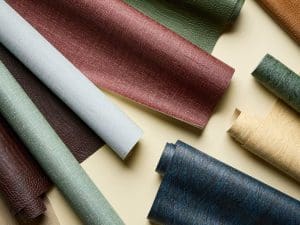
Our sustainable faux leather collection includes both PVC-free and PVC-based products. The important thing is to consider the environmental benefits, desired aesthetics and budget to identify a product that best meets your project’s unique needs.
Understanding PVC
Faux leather upholstery is often associated with PVC (polyvinyl chloride) because vinyl fabrics were traditionally made with this base polymer.
The Move Toward PVC-Free

PVC-free faux leather alternatives have increasingly been developed due to environmental and human health concerns. The concern is that, through conventional manufacturing, and at end of life at incineration, PVC can potentially form trace dioxins under some conditions.
Our collection houses PVC-free options with the following compositions:
- SILICONES (the Silica collection, Hayden and Silex)
- SILICONE/POLYURETHANE hybrids (Silica Suede and Silica Blend)
- EPUs (Endurance, Printwork, Dexter and Canter)
- POLYCARBONATE POLYURETHANES (the Ultrafabrics collection)
- POLYURETHANS (Lawson and Patterson)


PVC-based Innovation
However, modern industrial practices have dramatically reduced emissions and PVC has come a long way. Often the chemicals of concern (phthalates and heavy metals) have been eliminated, and it has very low VOCs.

There are also PVC-based products now that are formulated to biodegrade under landfill conditions.
This is a huge step forward.
Recyclable and Biodegradable
If recyclability or biodegradability is a non-negotiable requirement for your project, the following collections currently offer the most robust solutions.
The Terra Collection
A biodegradable vinyl textile made from 100% Hyphyn™, the Terra Collection sets a new benchmark for sustainable performance, combining refined aesthetics with commercial durability.
These faux leather products achieve 90%+ biodegradation within 24 months under landfill conditions.


Real Crypton Leather
Have you considered the benefits of real leather? Our Crypton Leather collection is also a fantastic option for those seeking products that biodegrade. Learn more in our Leather, Redefined blog post.


Recyclability – A Transparent View
It’s important to be clear: recycling faux leather remains a complex global challenge.
Neither faux leather nor real leather is easily recyclable, however there are two established pathways that help extend material life:
- UPCYCLING OFFCUTS: Manufacturing and upholstery offcuts can be donated or sold to accessories makers. For example, Crypton Leather offcuts from Cortina are repurposed into items such as wallets and pike bags.
- BONDED LEATHER PRODUCTION: Post-consumer leather furniture can be ground down and combined with binding agents to create bonded leather, commonly used for belts, bags and accessories.

Need Assistance?
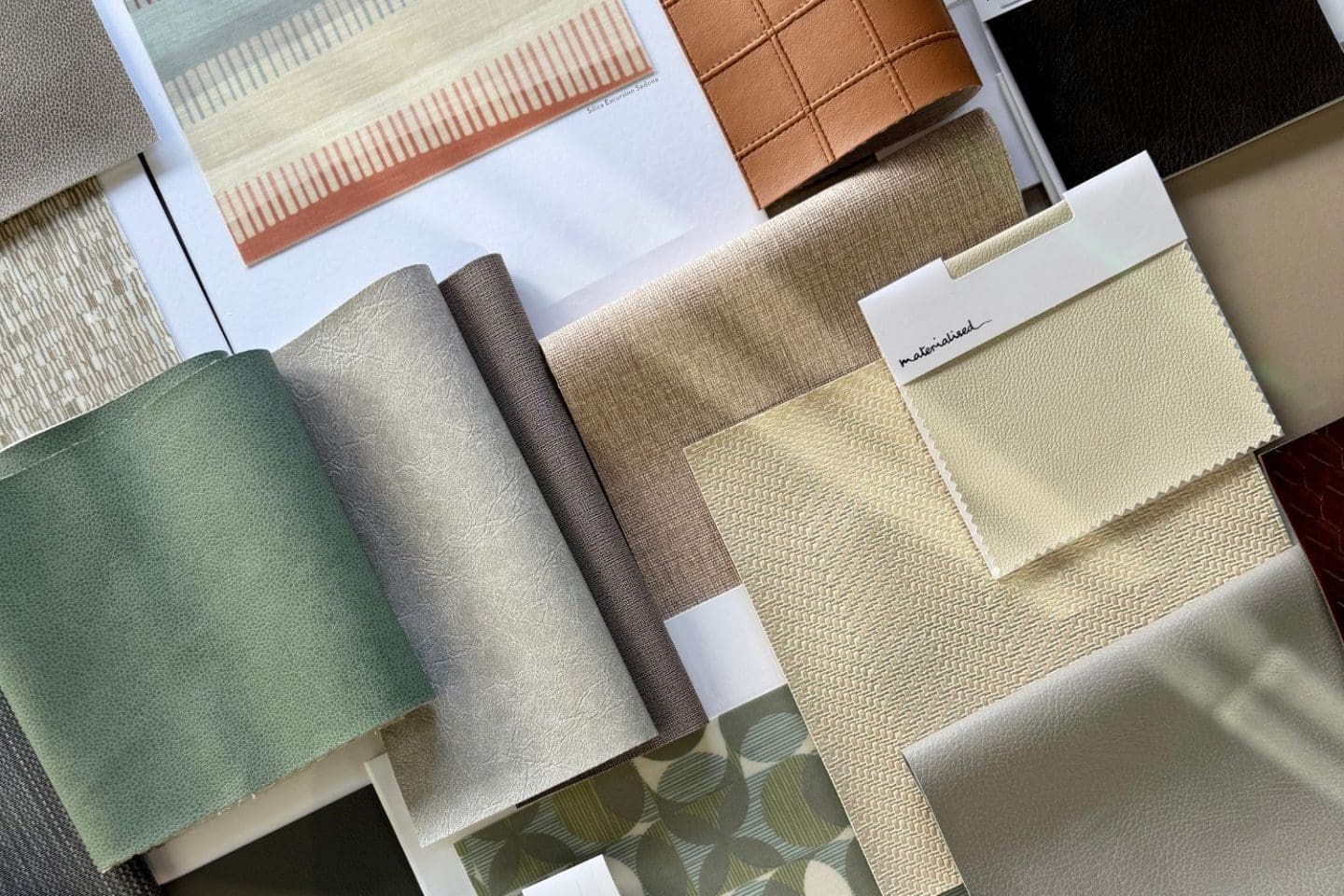
With over 67 designs in our faux leather collection, we understand that it can be a little daunting to make the selection. But we’re here to help. Get in touch with your brief, and we can guide you on the best solution for your project aesthetics, budget and any certification requirements needed for Green Star ratings.
The Bridge Between Design and Science
We continue to actively expand our range as new technologies and material solutions emerge. If sustainability outcomes are central to your brief, our team is always happy to help guide you toward the most appropriate option for your project.
How To Choose A Sustainable Faux Leather, In Summary
How to choose a sustainable faux leather in the complex material maze?
Sustainable faux leather means different things to different projects. For some, it’s about biodegradable materials or bio-based content. For others, it’s about achieving Green Star sustainability targets. The best option depends on your project’s environmental goals, performance requirements and certification needs.
When specifying sustainable faux leather, consider:
- Recycled or renewable material content
- Manufacturing chemistry and VOC emissions
- Durability and expected lifespan
- Environmental certifications and compliance requirements
- End-of-life outcomes such as recyclability or biodegradability
- Supply chain transparency and responsible sourcing

Before comparing products, it’s helpful to define what sustainability means for your project and identify any certification requirements early in the specification process.
Materialised can help you assess faux leather options based on performance, chemistry, lifecycle considerations and project requirements. By discussing your brief, sustainability goals and project timeline upfront, we can help narrow the selection, advise on availability and lead times, and identify products that align with your objectives.
Remember, specifying sustainable faux leather is rarely about a single attribute. The best solution balances environmental impact, durability, performance and project outcomes.
About the Author: Catherine McGowan

Related posts