In the fast-paced and demanding environments of healthcare and hospitality, the need for durable, easy-to-clean, and safe materials is critical.
One of the innovations that has revolutionised these industries is waterproof fabric. Designed to withstand heavy use while maintaining hygiene and comfort, waterproof fabrics offer a range of benefits that make them essential for modern healthcare and hospitality projects.
This article delves into the technology behind waterproof fabric.
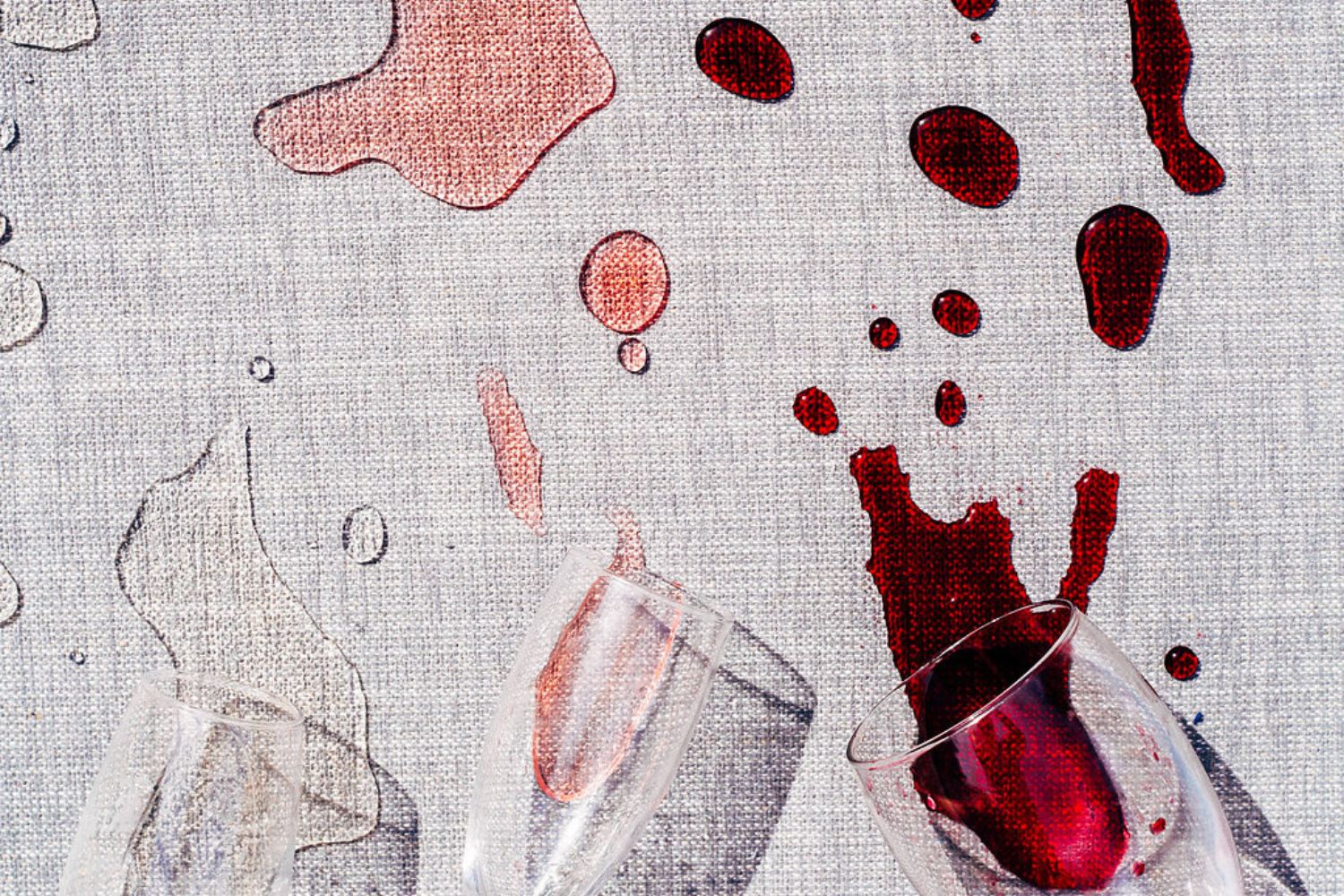
Understanding the Technology Behind Waterproof Fabric
Waterproof fabrics are engineered to prevent the penetration of liquids while remaining breathable and flexible. There are two primary methods for achieving waterproof backing: lamination and coating.
- LAMINATION: This method involves bonding a waterproof membrane, such as polyurethane (PU) or polytetrafluoroethylene (PTFE), to the fabric. These membranes have microscopic pores that are large enough to allow air to pass through but small enough to block water molecules. This keeps the fabric breathable while offering effective moisture resistance.
- COATING: Another method is to apply a layer of waterproof material directly to the fabric. Polyvinyl chloride (PVC) and polyurethane are common coating materials. Coated fabrics may be slightly stiffer than laminated ones, but they offer excellent waterproof properties and are highly durable.
Here’s a fascinating video showing the technology behind the making of Crypton fabric.
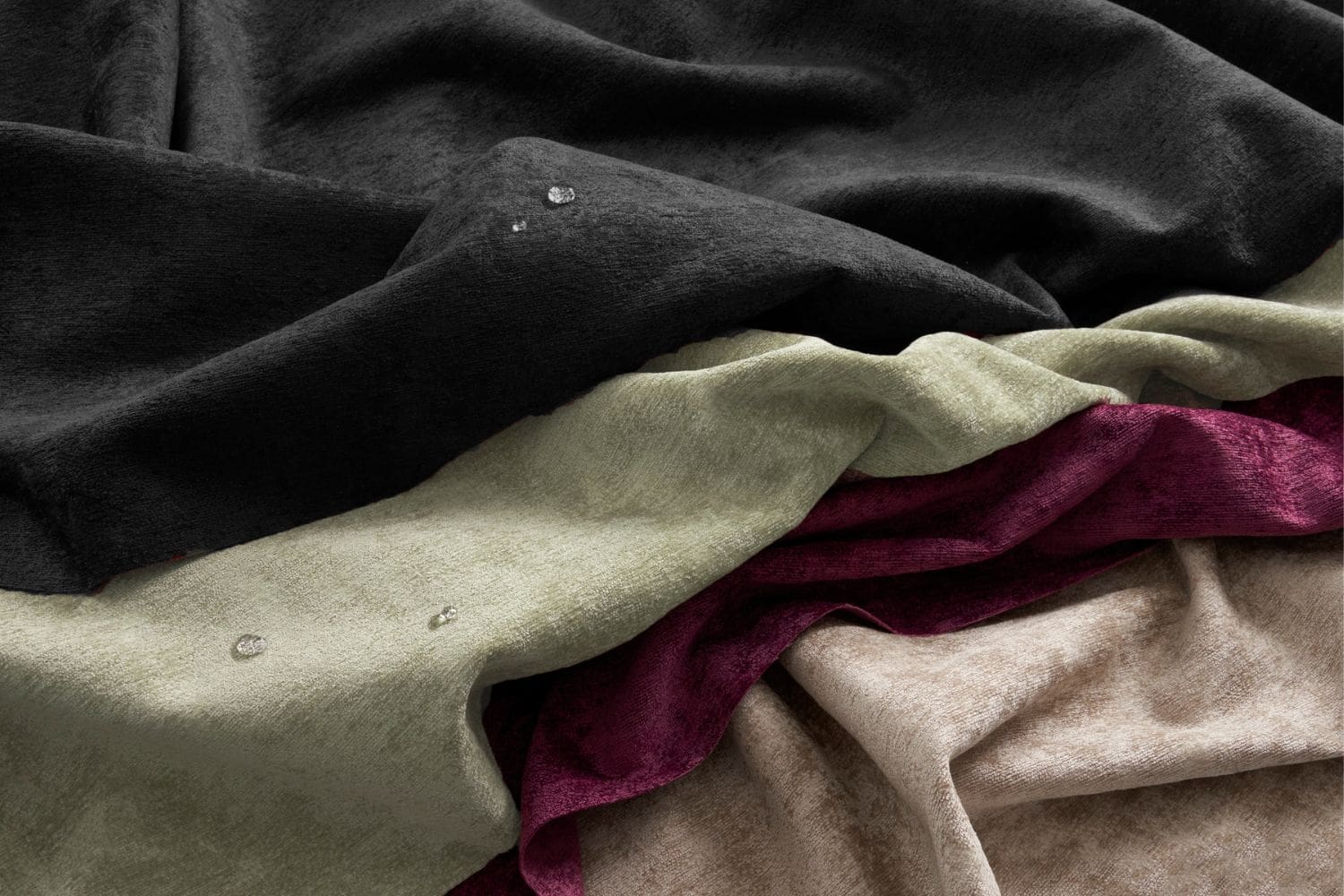
Stain Repellence vs Stain Release
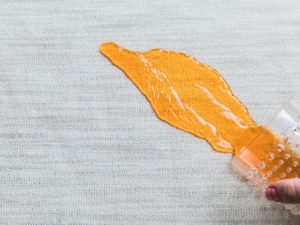
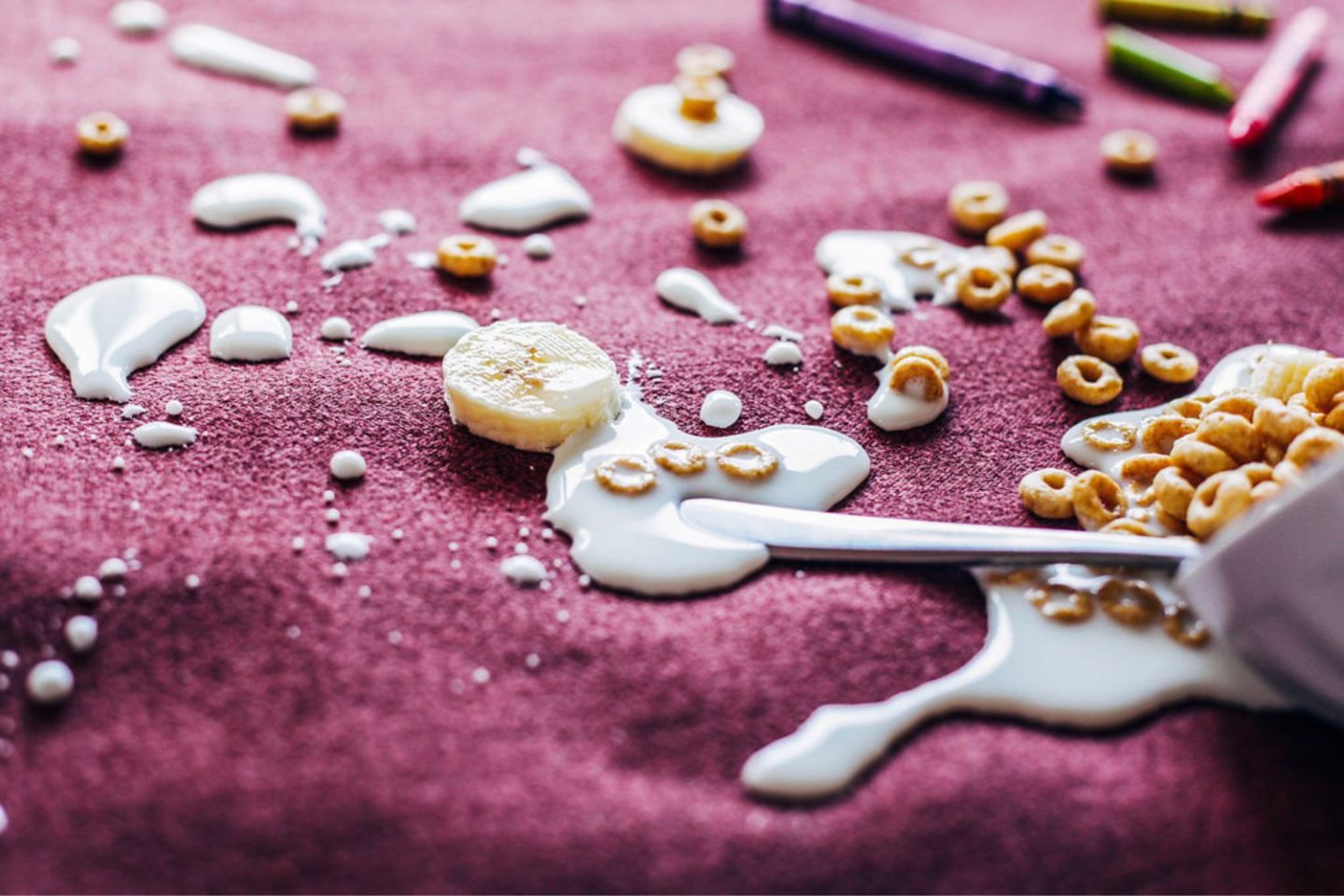
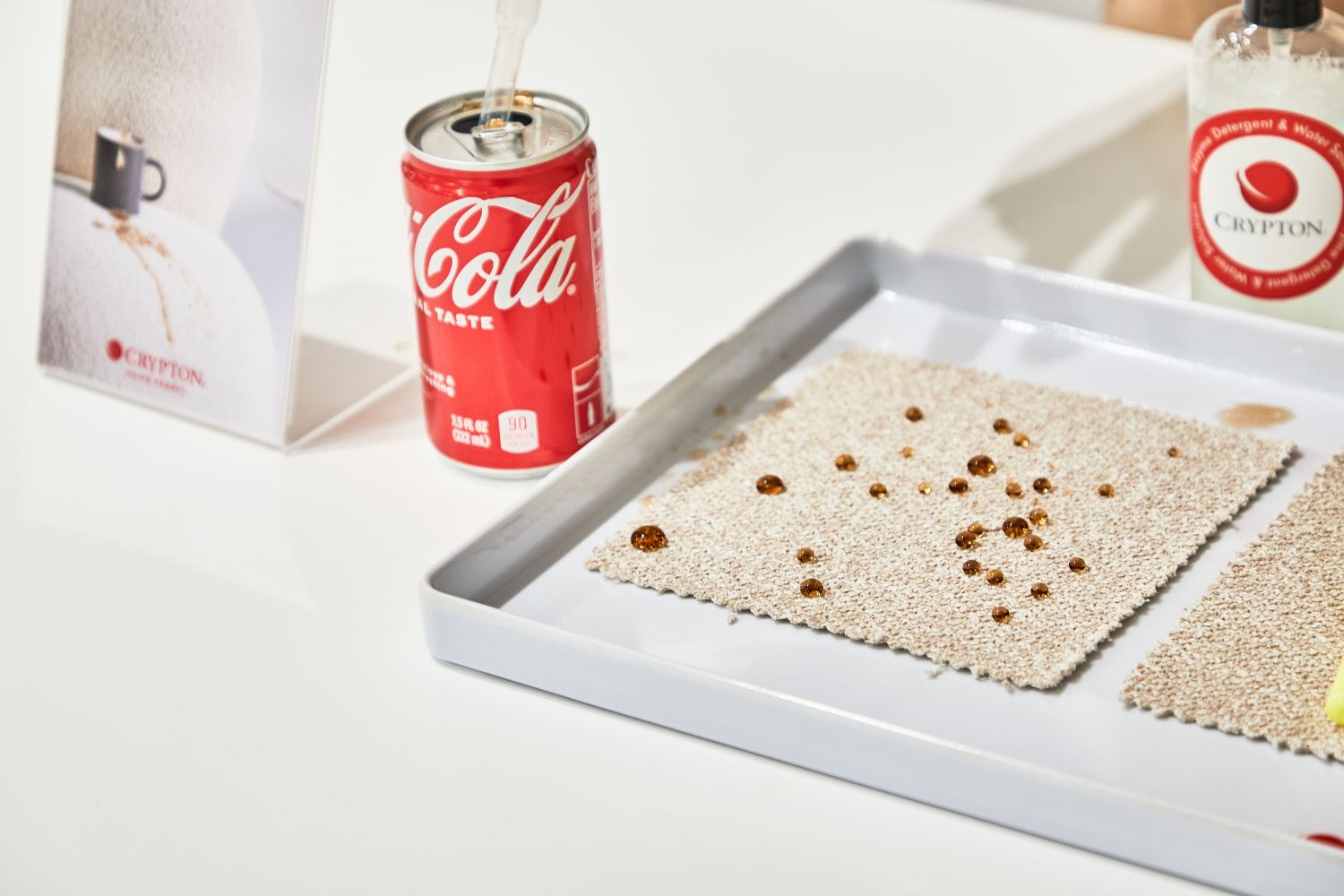
Our waterproof fabrics also have either a stain repellent or stain release finish on the face of the fabric. A stain repellent finish will cause the liquid on the surface to bead. On the other hand, a stain release finish will absorb the liquid on the surface of the fabric, yet still be impenetrable on the back.
Both options mean that the fabric has exceptional cleaning properties, and stains are easy to remove.
Additionally, advanced waterproof fabrics may incorporate antimicrobial treatments to inhibit the growth of bacteria, mould, and mildew, which is crucial for environments where hygiene is paramount.
Waterproof Fabric Technology – Materialised Options
Materialised has led the way in offering the very latest waterproof fabric technology, beginning with the introduction of Crypton fabrics to Australasia in 1993. We now offer the following options:
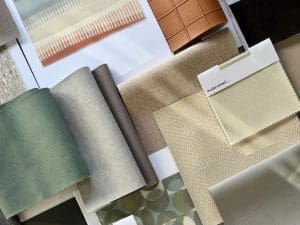
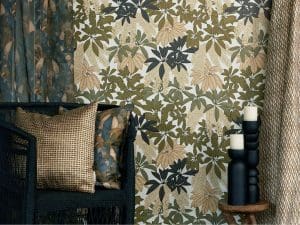
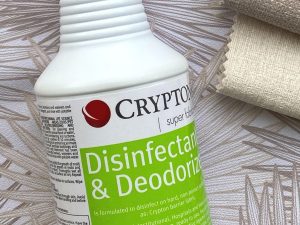
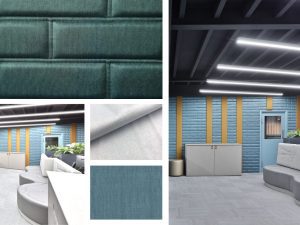
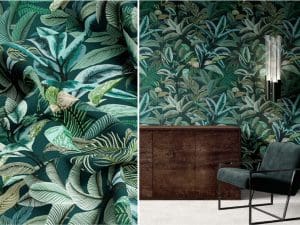
- CRYPTON – The undisputed queen of water resistant fabric options. 30 years ago, Crypton revolutionised contract design, creating the first patented moisture barrier and permanent stain and odour resistant fabrics. Crypton represents our largest offering of water resistant fabric designs including printable base cloths, meaning we can digitally print designs onto some Crypton fabrics.
- ZIRCON – We have offered the Zircon waterproof finish since 1995 and Zircon Zem has become one of our most popular printable base cloths, particularly in healthcare projects.
- ARMOUR – For our Australian Made waterproof option, see the Armour Pave collection.
- ALTA – See the Alta collection.
- DYNAMIC – Our outdoor waterproof fabric collection, with a UV resistant finish.
- FORT – The newest to our range is the Fort printable waterproof base cloth. See Fort Loom.
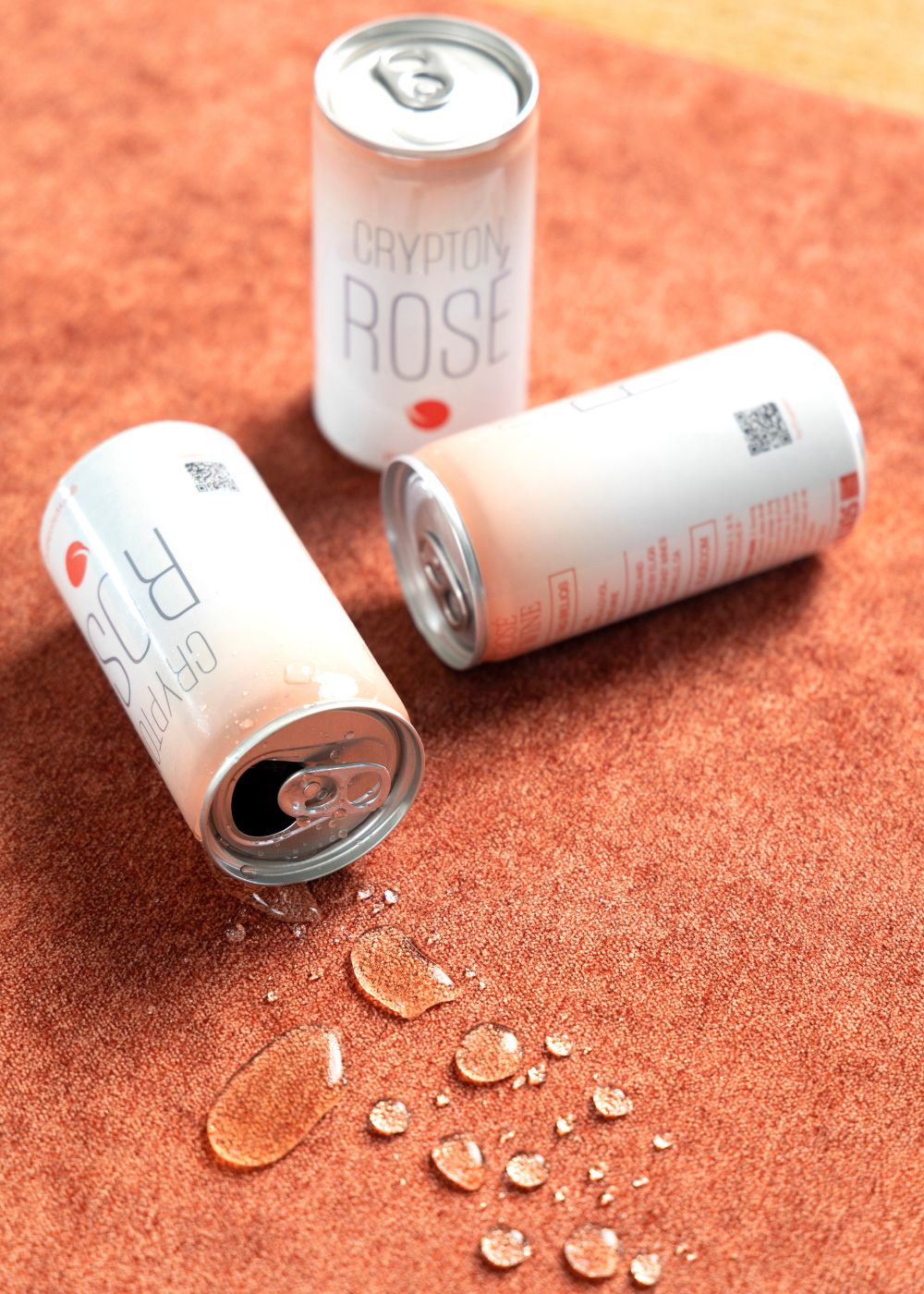
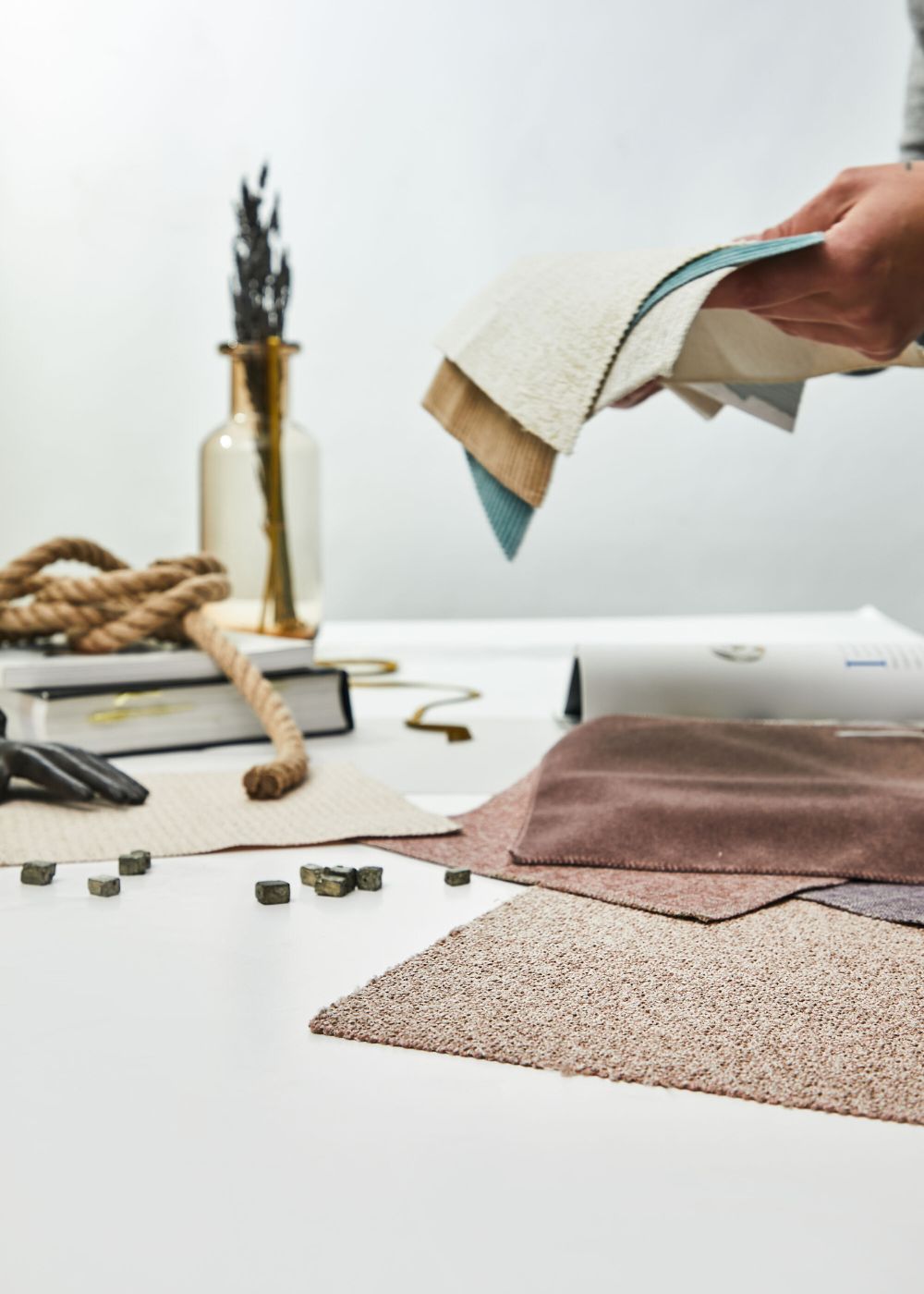
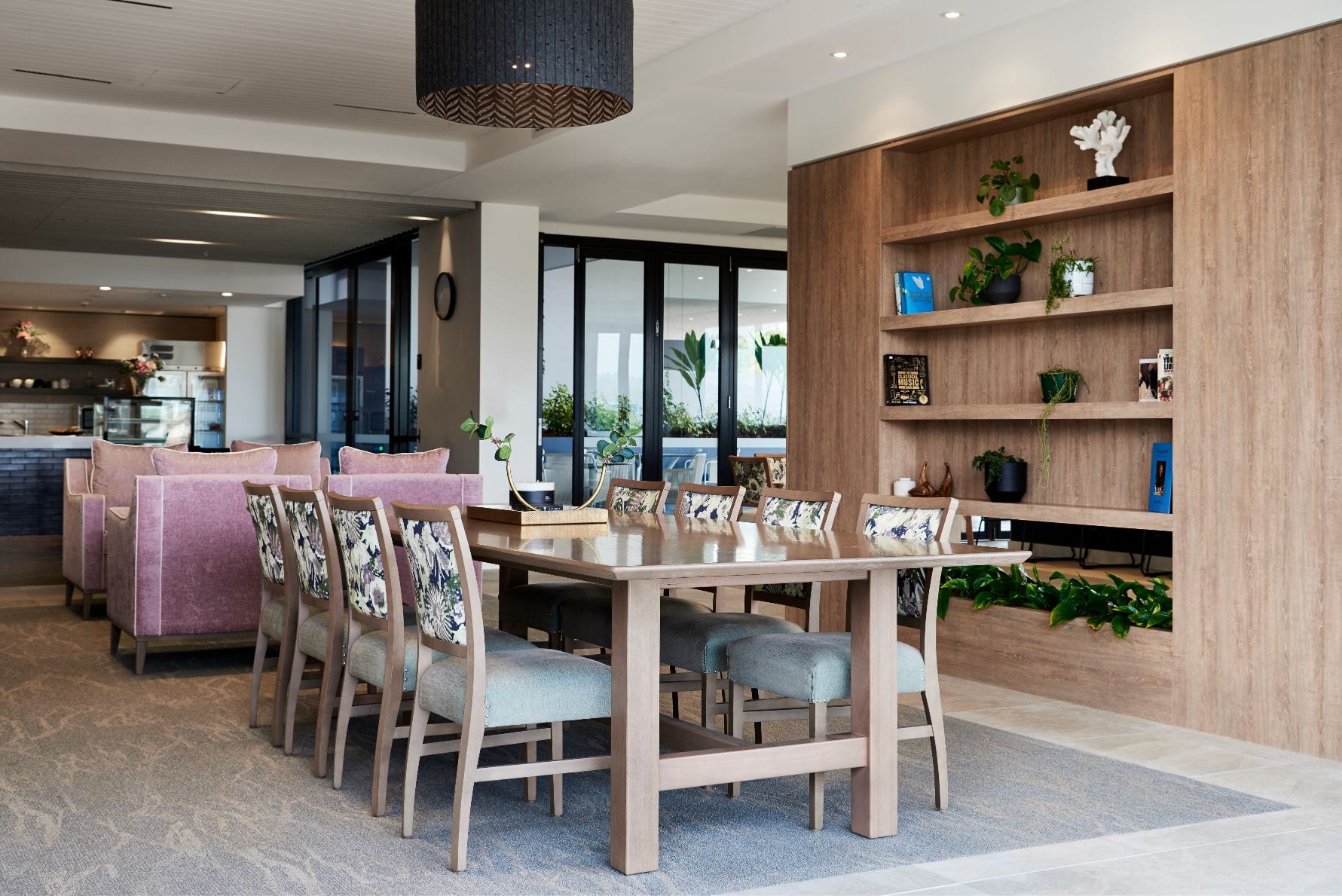
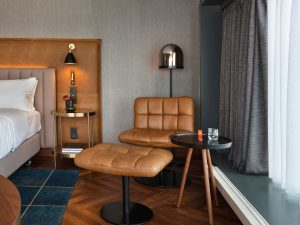
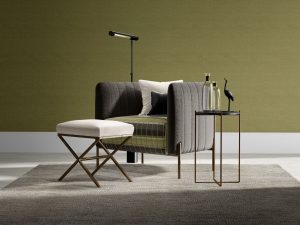
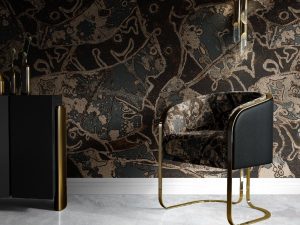
All furniture by Crown Furniture
Waterproof or Water Resistant?
Technically all our waterproof upholstery fabrics are waterproof because liquid will not penetrate the moisture barrier backing.
However the term ‘waterproof’, depending on the application, sometimes eludes to specific outdoor fabric like our Dynamic collection. Being woven with solution-dyed olefin combined with UV resistance ensures longevity of the fabric outdoors.
Be sure to double check the specifications for your particular application requirement.


Waterproof Fabric Technology History
Fabrics that combined waterproofing with breathability became a key focus in the 1980s – 1990s. Polyurethane (PU) coatings were introduced, offering a softer feel than traditional PVC while still providing excellent water resistance. During this period, manufacturers began adopting more advanced coatings and laminations that allowed contract furnishings to be both comfortable and functional. Materialised was a very early adopter of this technology which has transformed the design and manufacturing industry.
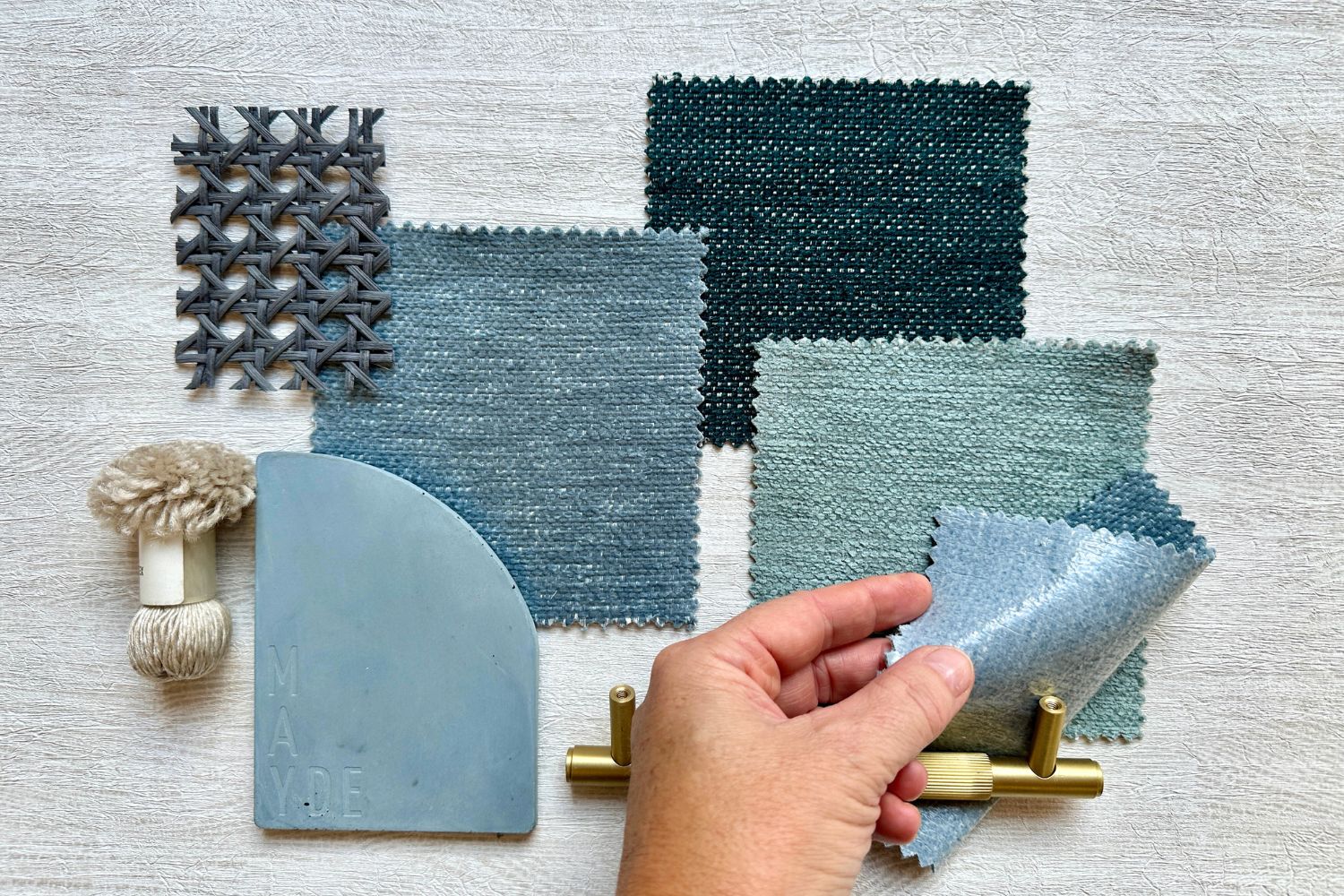
In the 21st century, the focus on sustainability and comfort has led to the development of eco-friendly waterproof fabrics and coatings. The contract furnishings industry started using materials with PFC-free coatings and antimicrobial properties, making them ideal for high-traffic areas like hospitals and aged care facilities. Waterproof fabrics now often feature advanced stain resistance and durability.
The Future
With the continued advancement of technology, we can expect to see even greater innovations that further improve performance and sustainability, making them even more integral to the future of contract furnishings.
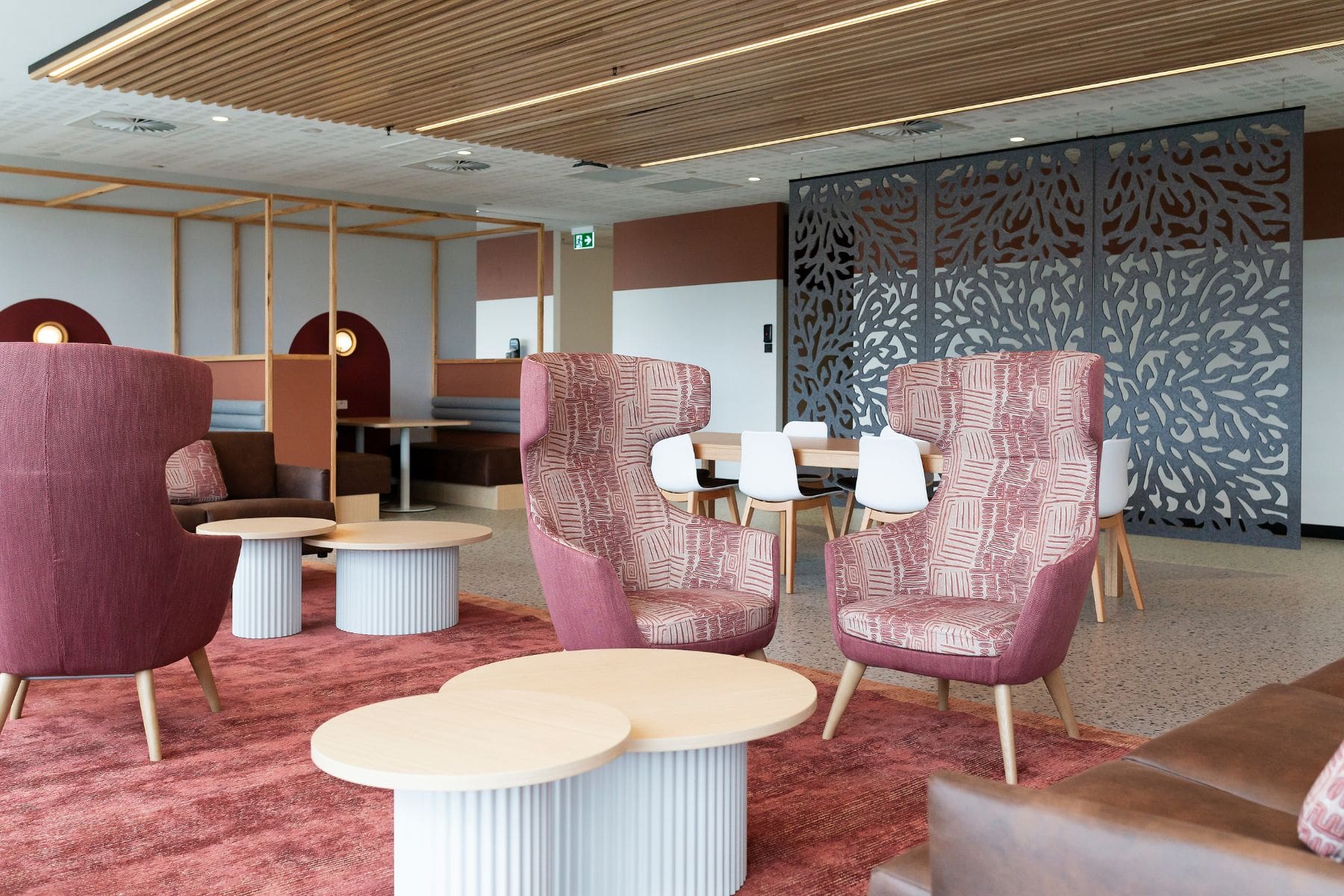
Materialised will continue to be ahead of the game in making the very best available to you, ensuring that these products meet the rigorous standards required for commercial spaces.
Get in touch to discuss commercial fabric requirements for your next project, to chat with our expert team and to order samples.
About the Author: Catherine McGowan

Related posts