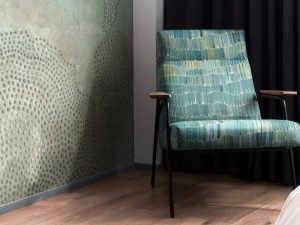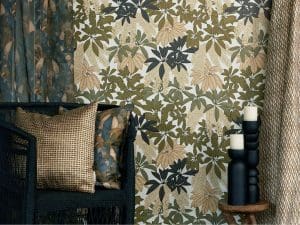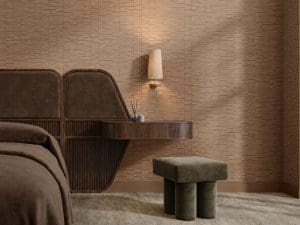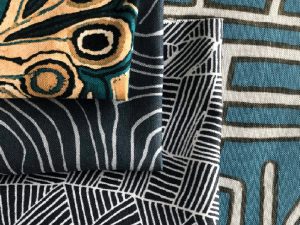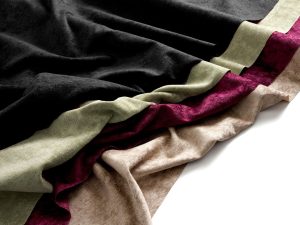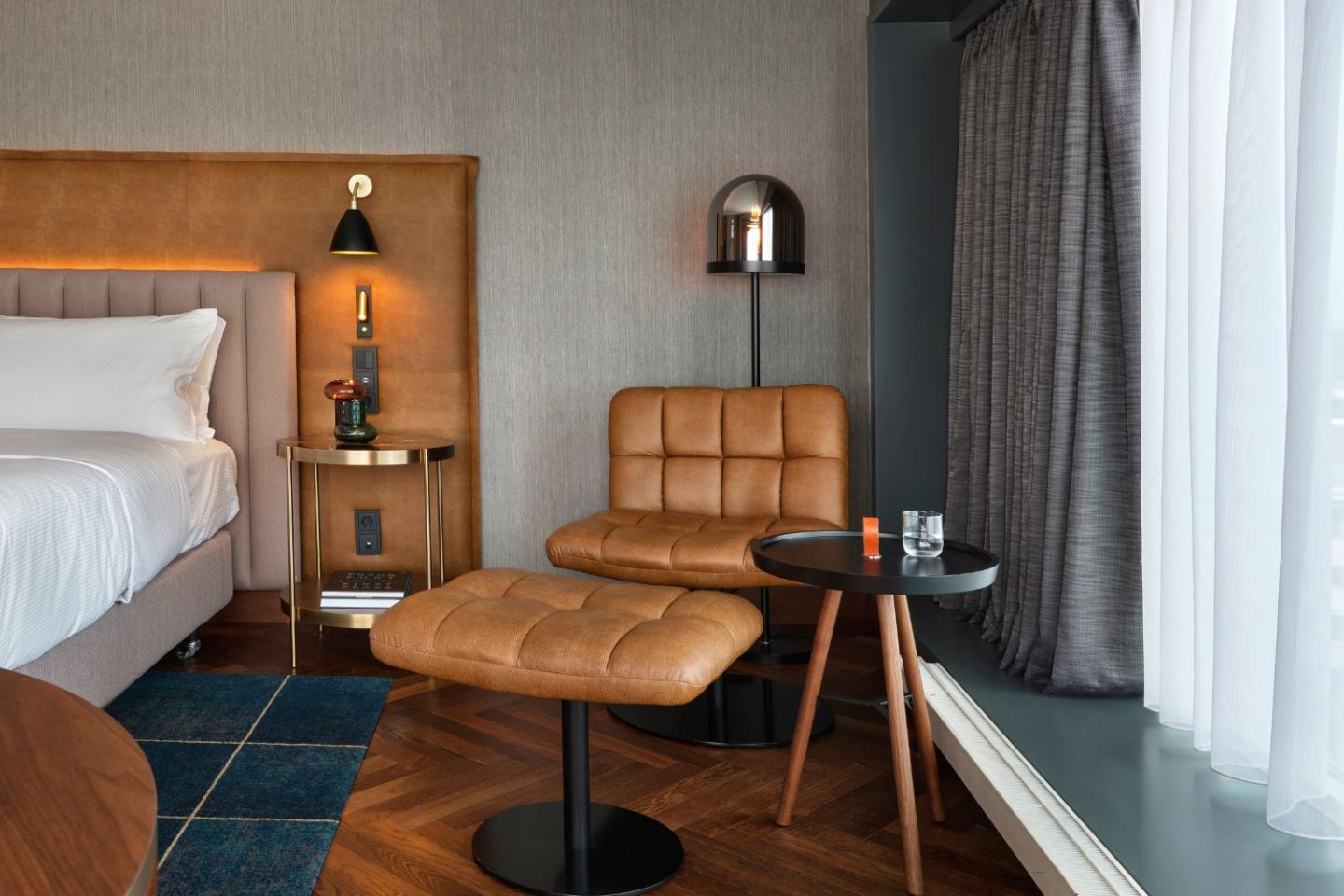
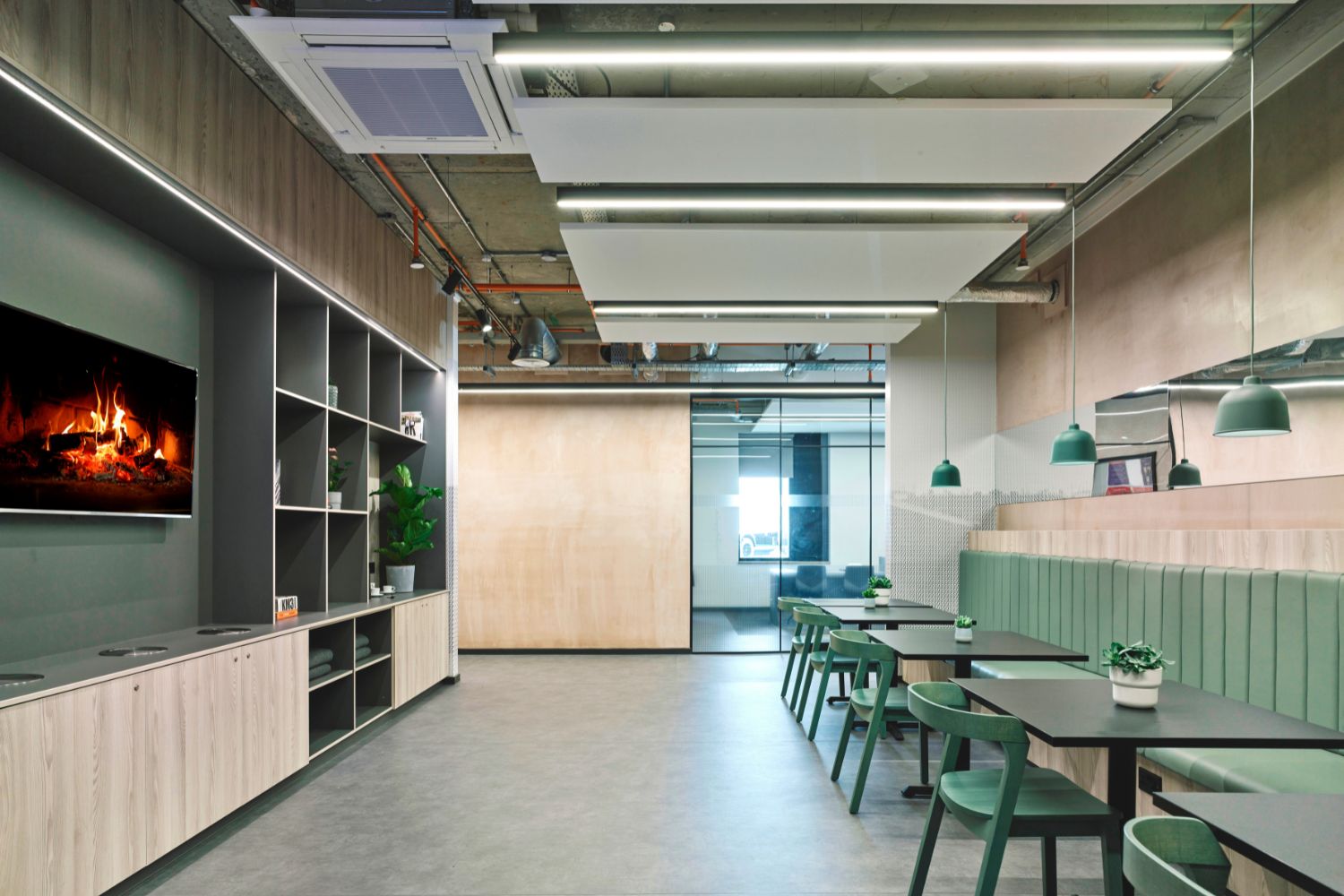
(Main image: Brisa Distressed Lasso, Hilton Frankfurt, by The Hickson Design Partnership Ltd)
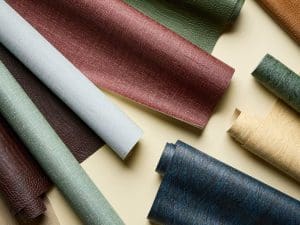
As demand grows for high-performance, sustainable faux leather, Ultrafabrics has become a go-to specification across healthcare, hospitality, workplace, and transport projects.
But what makes Ultrafabrics stand out, and why are designers increasingly searching for it by name?
This guide breaks down the key performance benefits, hydrolysis resistance, and specification advantages of Ultrafabrics, helping you confidently select the right material for your next project.
What is Ultrafabrics Faux Leather?
With most of their faux leather manufactured in Japan*, Ultrafabrics positions themselves as the cornerstone of tomorrow’s luxury.
Over 25 years ago they sought to redefine expectations of animal-free fabrics and have continued to raise the bar on comfort, innovation and performance ever since.
Based on the belief that design always considers people and planet, they are on a dedicated journey towards a sustainable future.
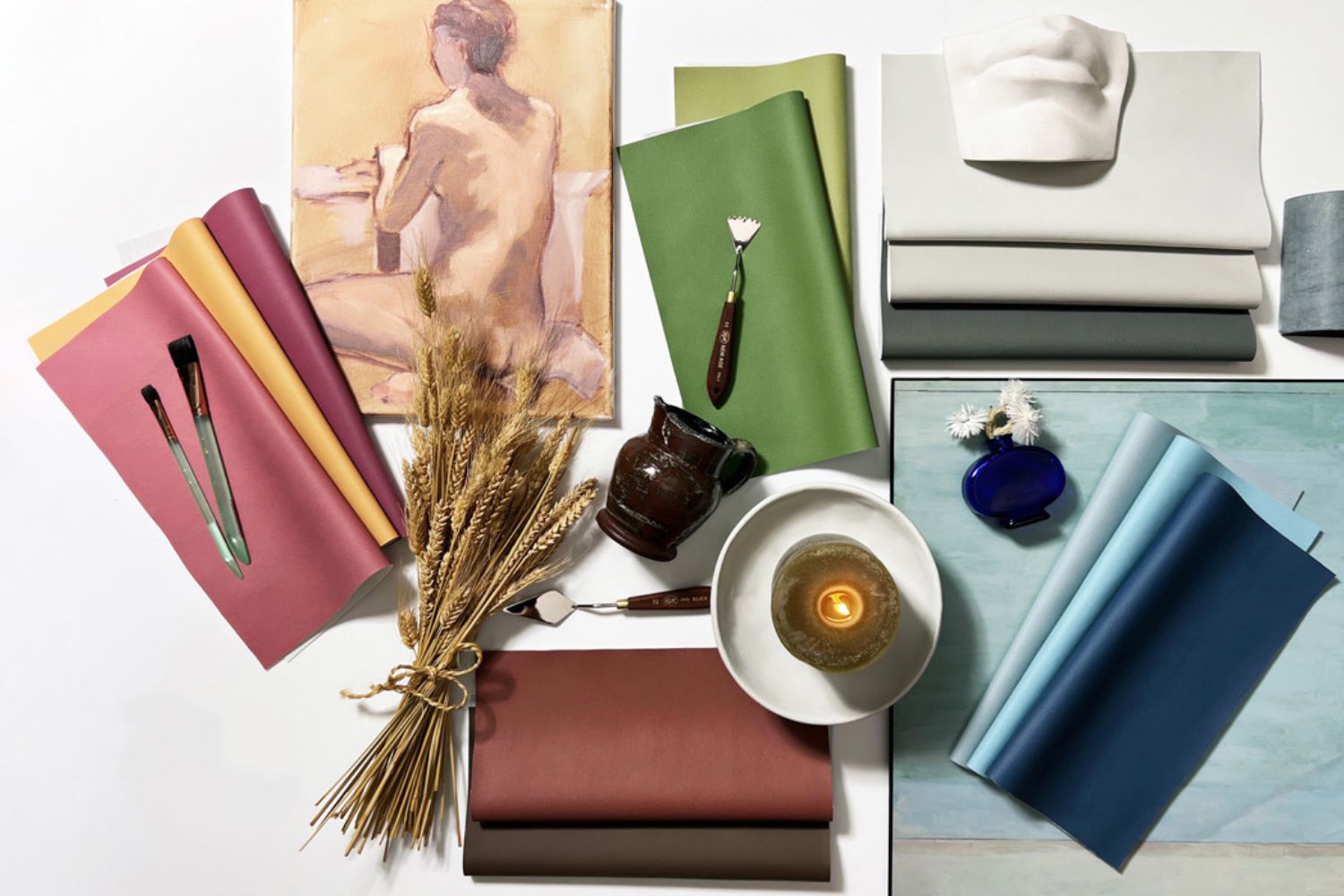
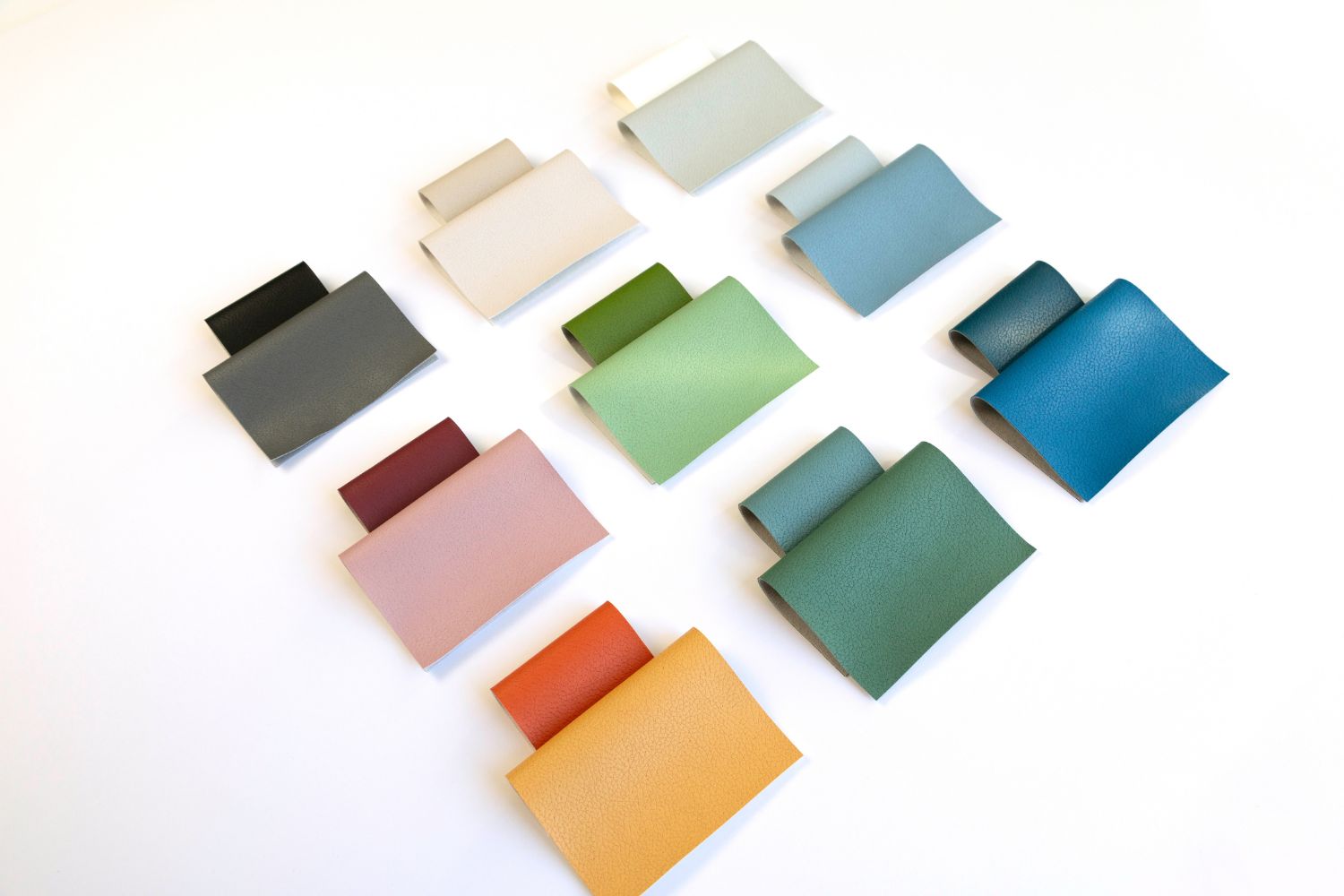
As a polycarbonate polyurethane (PC-PU) the range is designed to significantly outperform standard PU materials, helping extend product lifespan and reduce maintenance or replacement costs.
For architects and designers searching for “high-performance faux leather” or “commercial-grade leather alternatives”, Ultrafabrics consistently ranks as a leading solution.
Why Hydrolysis Resistance Matters in Faux Leather
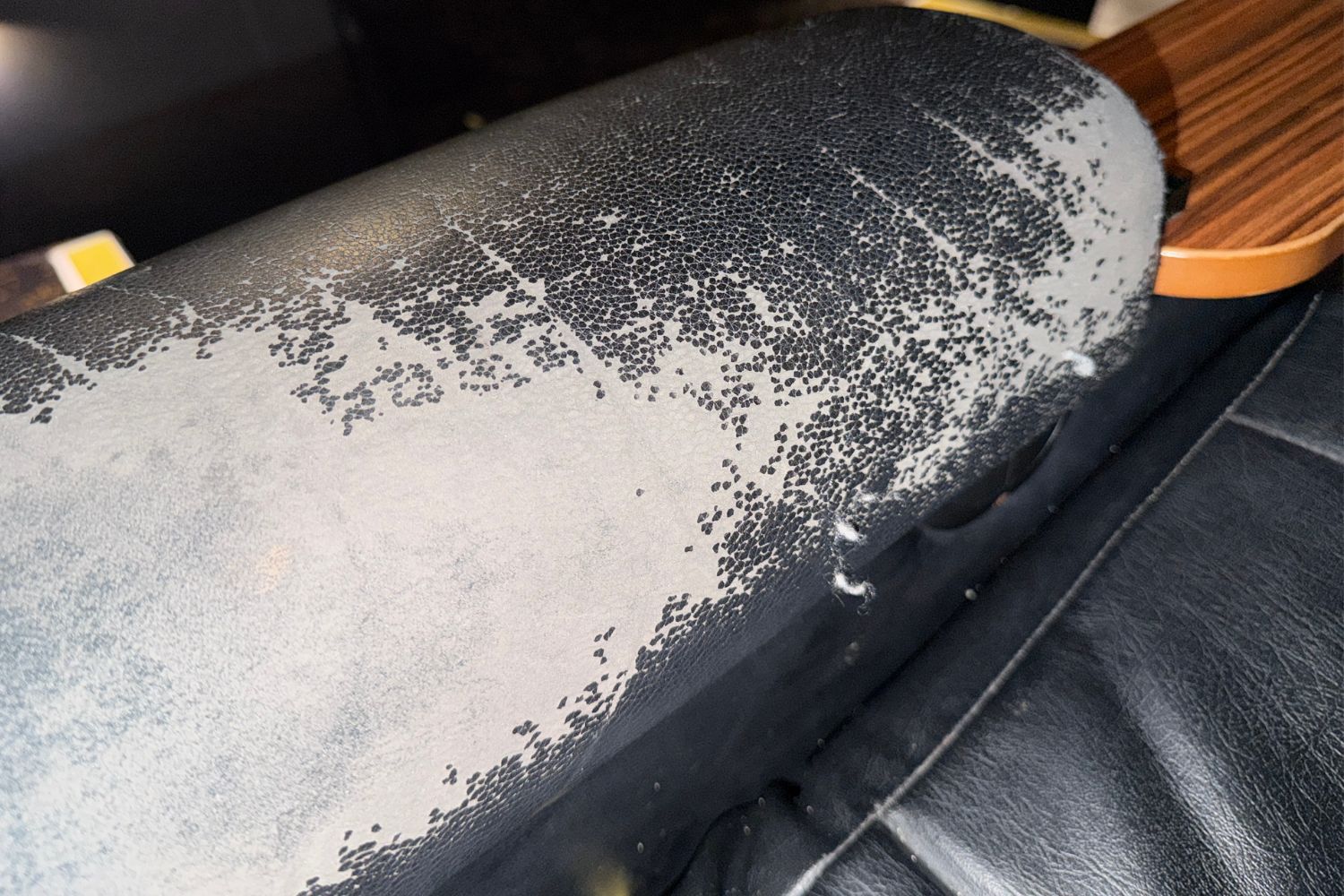
One of the most common causes of faux leather failure is hydrolysis, a chemical breakdown that occurs when a coated fabric is exposed to moisture, heat, and humidity over time.
This can result in:
- Cracking
- Peeling
- Surface degradation
Hydrolysis testing is the most important criteria in determining whether a faux leather will endure in high-traffic settings.
Ultrafabrics Hydrolysis Performance
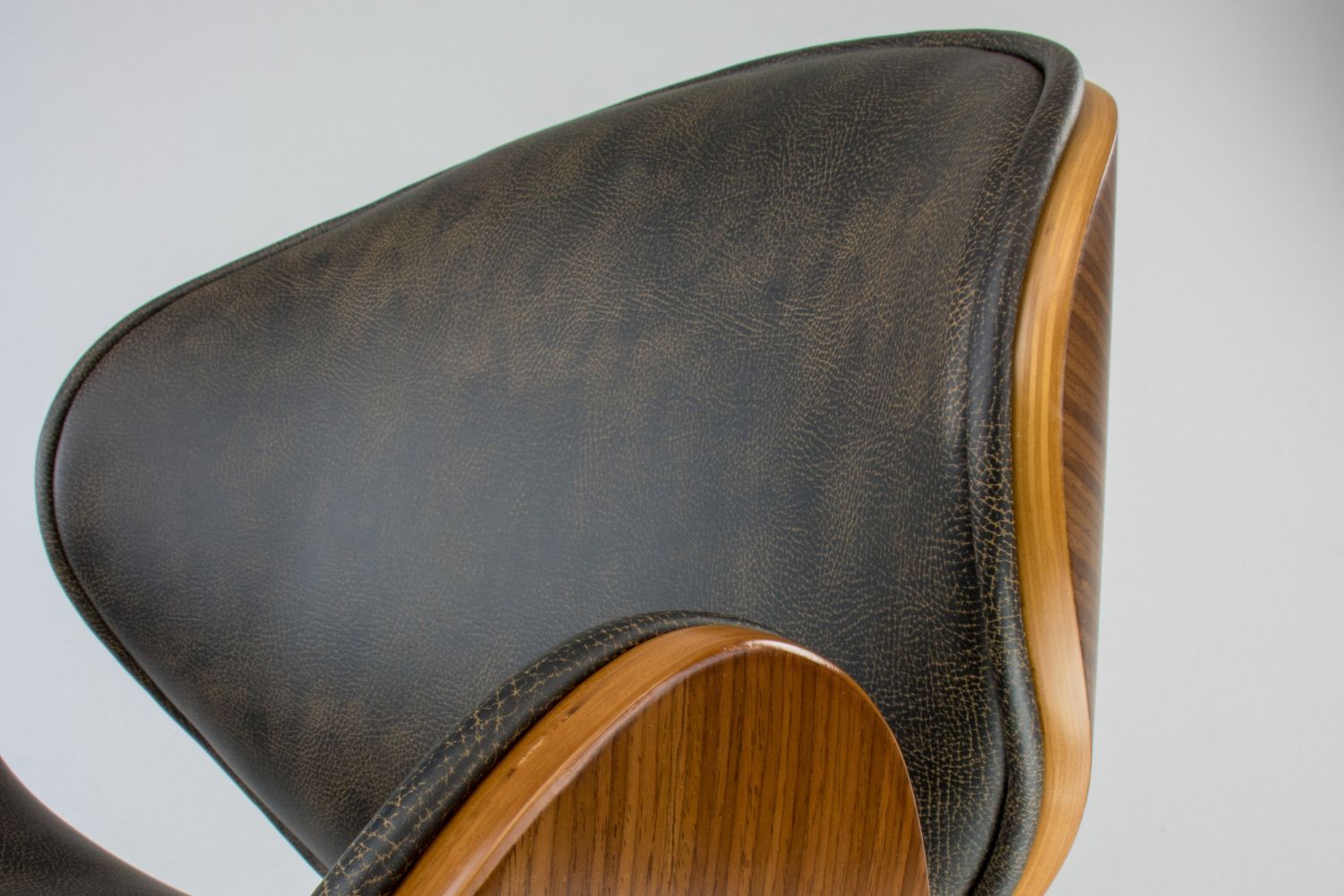
The Ultrafabrics collection is engineered to combat hydrolysis. The testing process evaluates the integrity of the fabric to resist delamination by subjecting the material to high water pressure and humidity.
Ultrafabrics products are specifically tested using the following methods:
- ISO 1419, Method C – Accelerated ageing, also known as the tropical or jungle test.
- ASTM D3690 Section 6.11 – Hydrolytic stability.
The results?
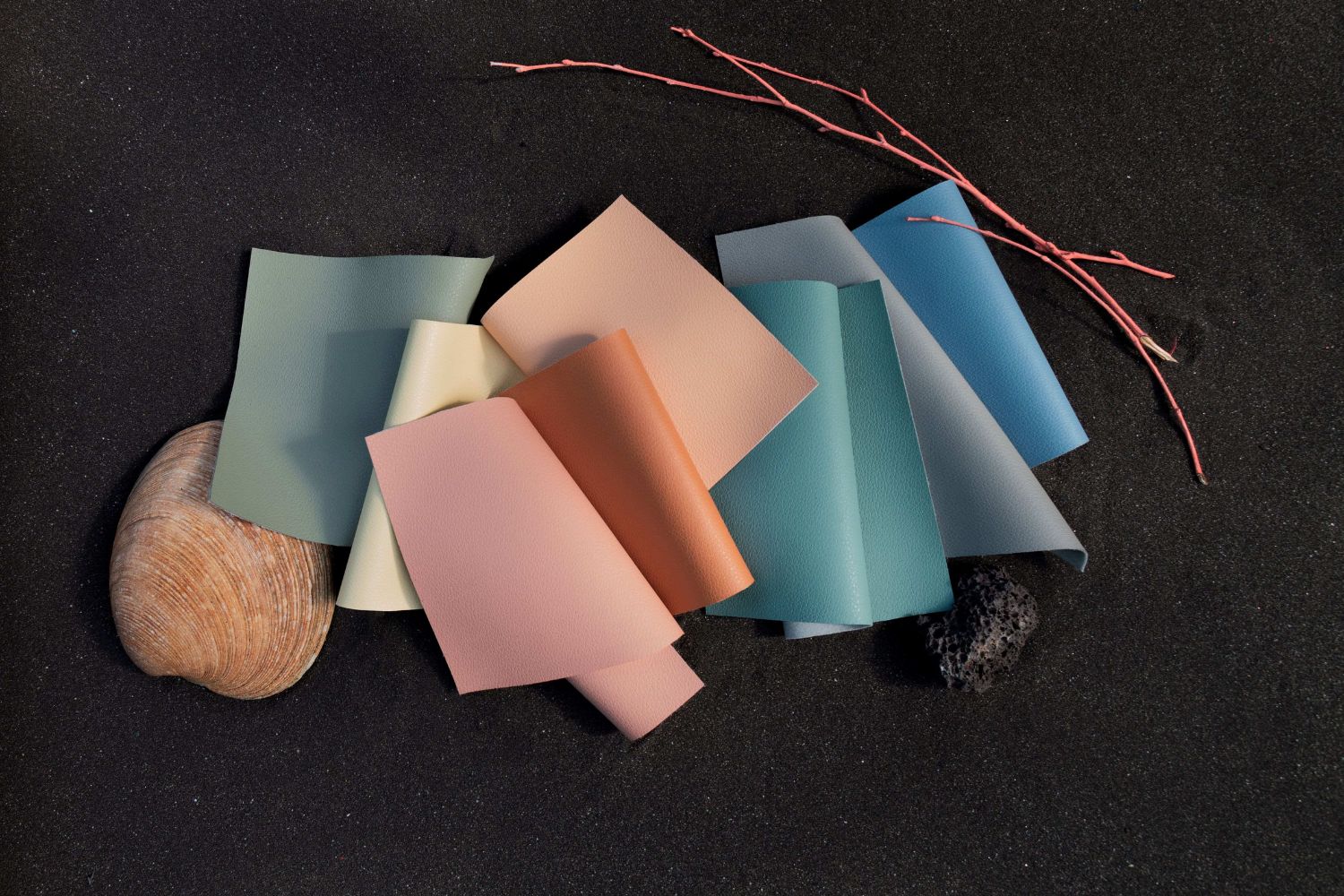
The majority of the Ultrafabrics designs we carry boast a hydrolysis resistance of 16 weeks – the highest test results in the whole of our faux leather range – with Montage coming in at a solid 10 weeks. It is broadly accepted that the number of weeks relates to the number of years the product will resist hydrolysis i.e. Brisa will wear well for 16 years.
Performance Benefits of Ultrafabrics
Beyond hydrolysis resistance, Ultrafabrics delivers a well-rounded performance profile that makes it ideal for commercial specification.
- Durability & abrasion resistance
- Easy to clean and maintain
- More comfortable than traditional vinyl, reducing the “sticky” feel often associated with coated fabrics (in particular Brisa and Brisa Distressed which boast breathable technology)
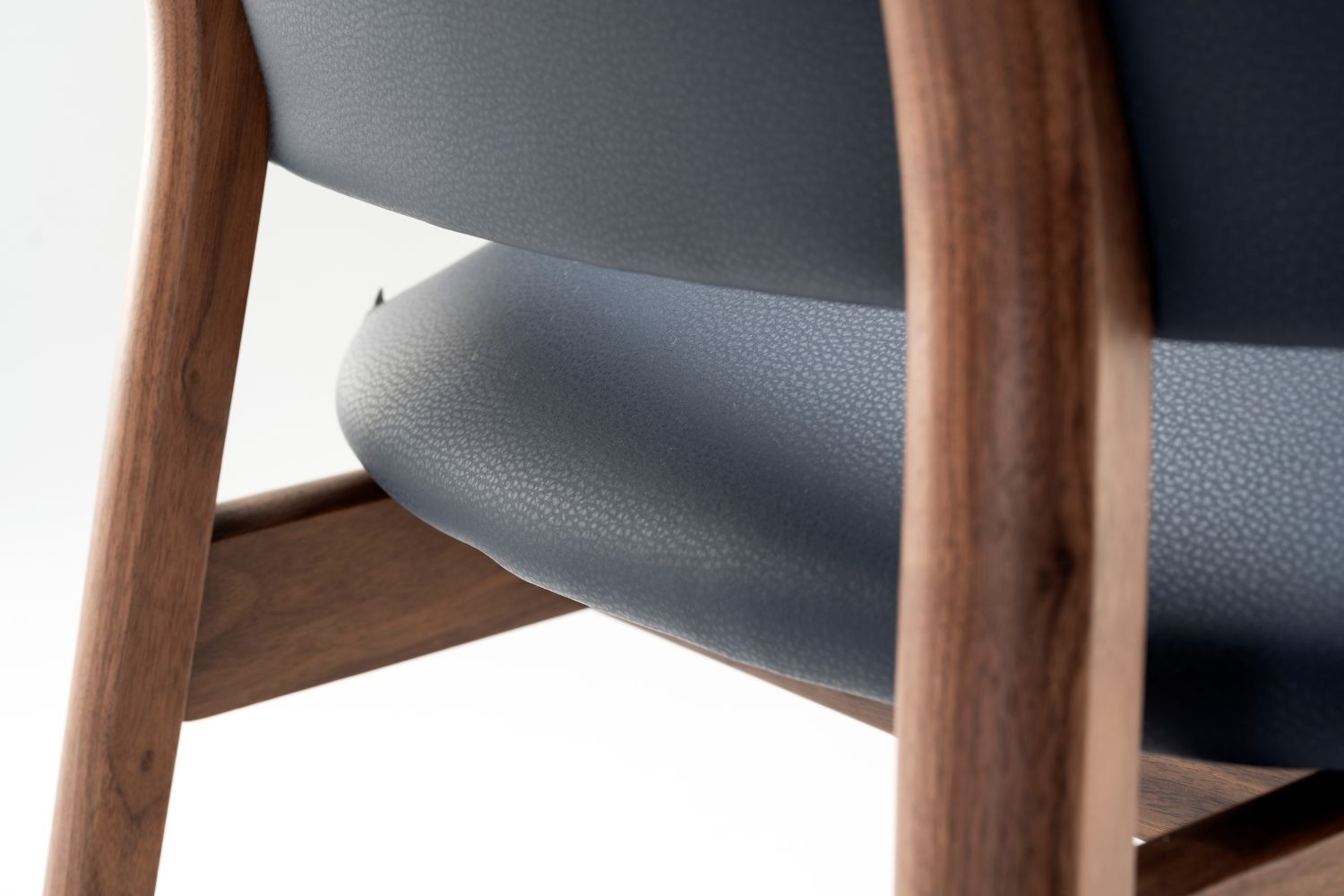
- Premium tactile quality closely mimicking genuine leather
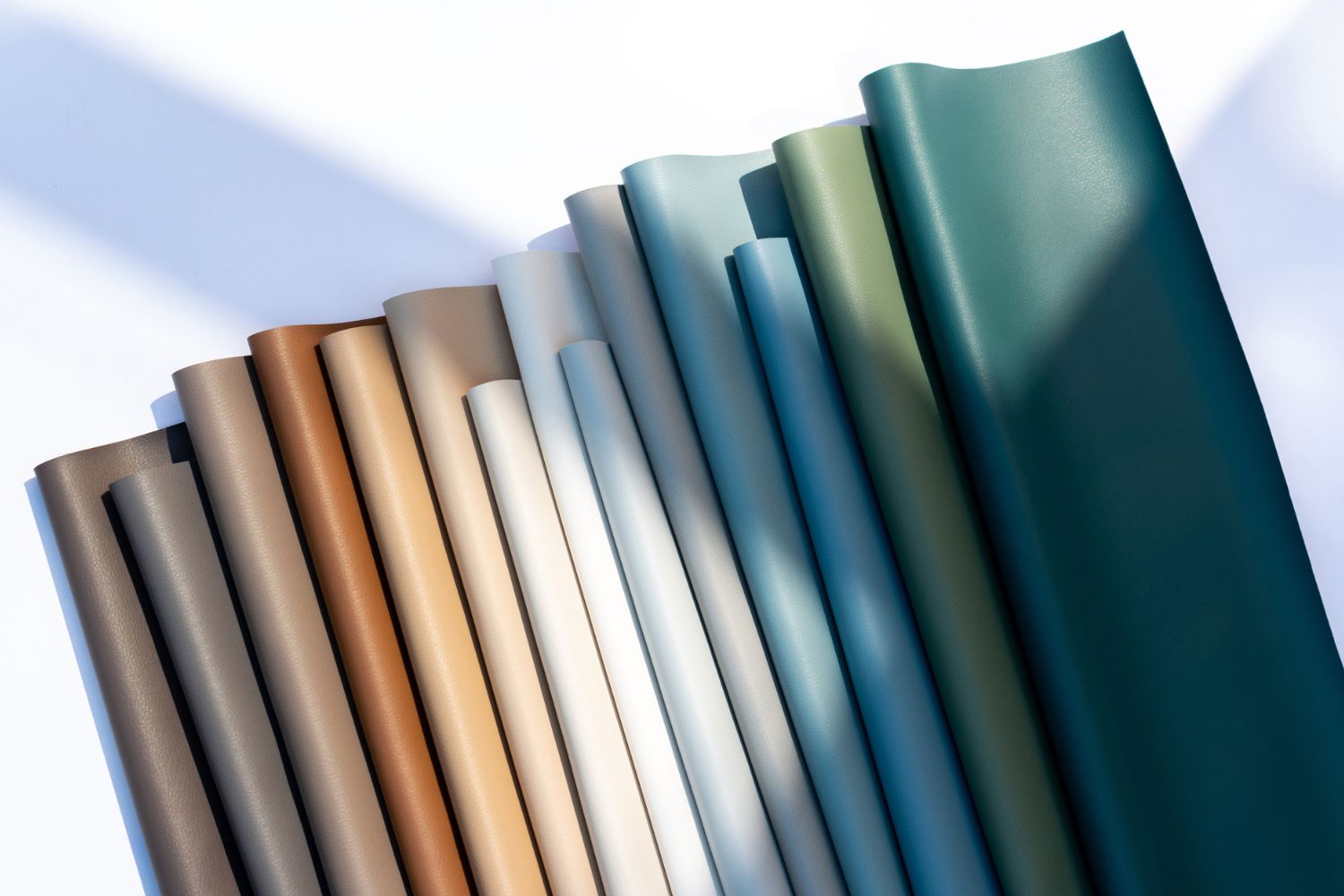
- Reliable colour and finish across batches, ideal for large-scale rollouts
Sustainability Considerations
Sustainability in faux leather is complex and evolving. Ultrafabrics contributes through:
- Recycled/renewable content: Their backcloth comprises of recycled or innovative renewable materials
- The recycled polyester is sourced from REPREVE® and uses recycled plastic, post-consumer polyester, and recycled post-industrial polyester, utilising approx. 9 recycled plastic bottles per metre.
- Rayon, sourced from ECOVERO™, is a viscose-alternative fibre that uses sustainable wood inputs from certified and controlled sources. This reduces water impacts, emissions, and other enviro impacts.
- TENCEL™ Modal fibres used in Ultraleather are a cellulosic fibre manufactured from beech wood sourced from sustainable forests in Austria and neighbouring countries.
- Susterra®, made from dent corn (field corn), is used in Volar Bio backing, reducing reliance on fossil fuels / reduces carbon footprint.
- Reduced emissions: Goals to reduce direct and indirect emissions (carbon, greenhouse gases)
- Manufacturing: The mill in Japan is designed for low-carbon, high-tech manufacturing, utilising hydrogen energy and is ISO 14001 certified.
- Bio-based adoption: Transitioning collections (like Volar Bio) to use Susterra® bio-based resin.
- Certifications: The company is increasingly using third-party verifications like SCS (Indoor Advantage Gold) to ensure transparency and meet regulatory requirements.
For designers searching “sustainable faux leather options”, the key is to look beyond a single claim and evaluate performance, lifespan, and material composition together.

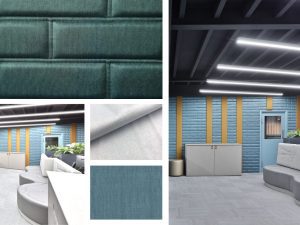
Applications: Where Ultrafabrics Performs Best
Ultrafabrics is widely specified across:
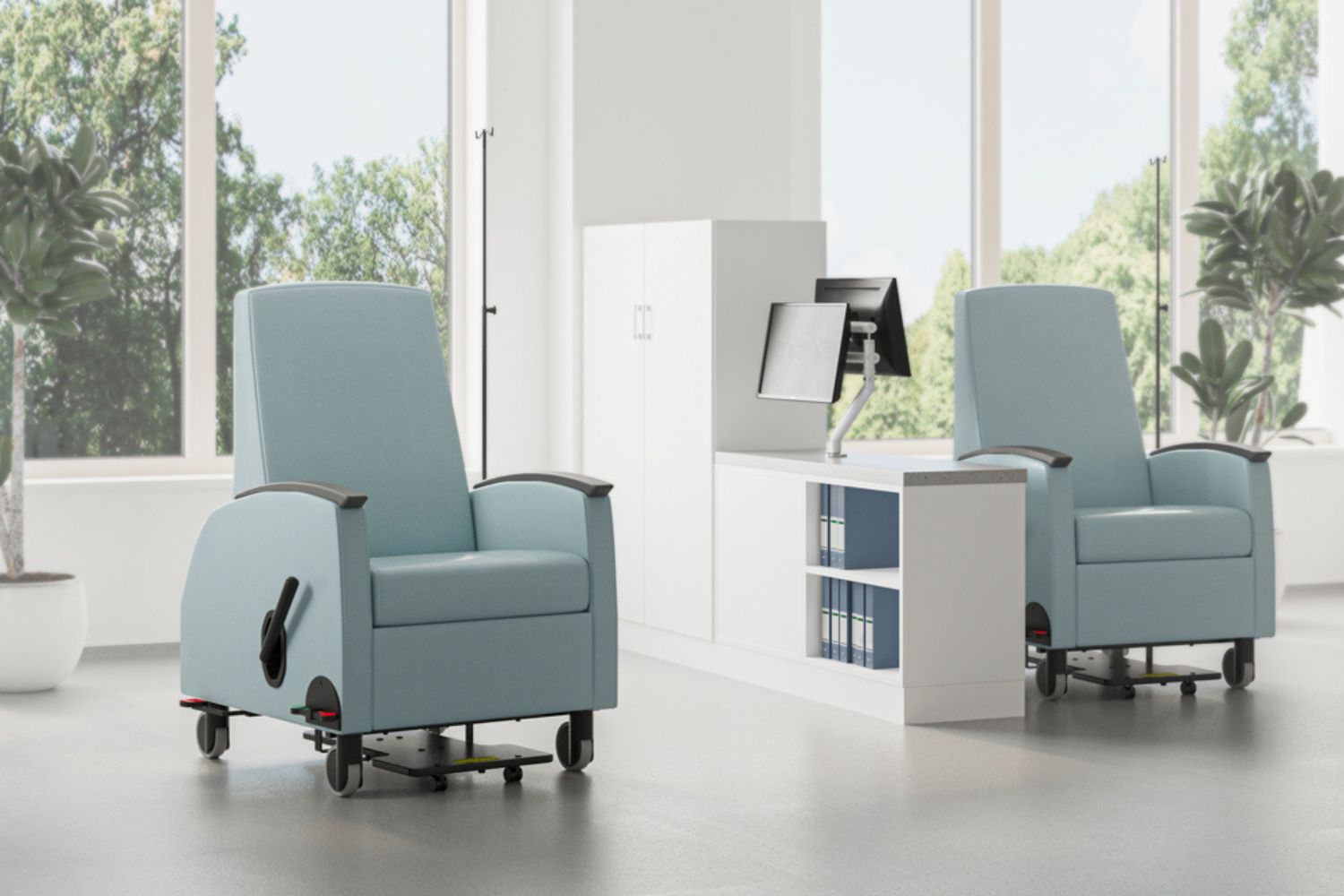
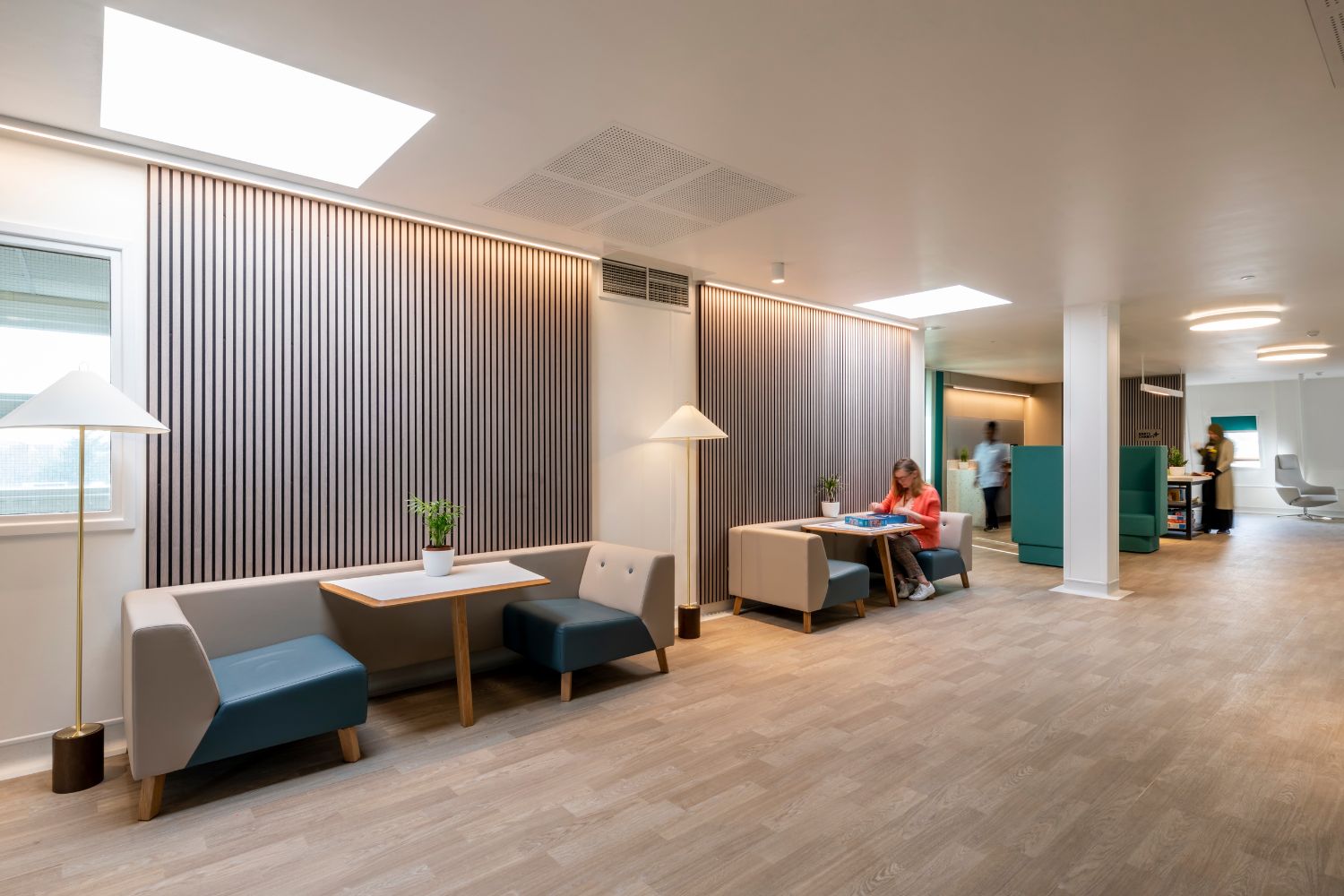
- Healthcare interiors (waiting rooms, patient seating)
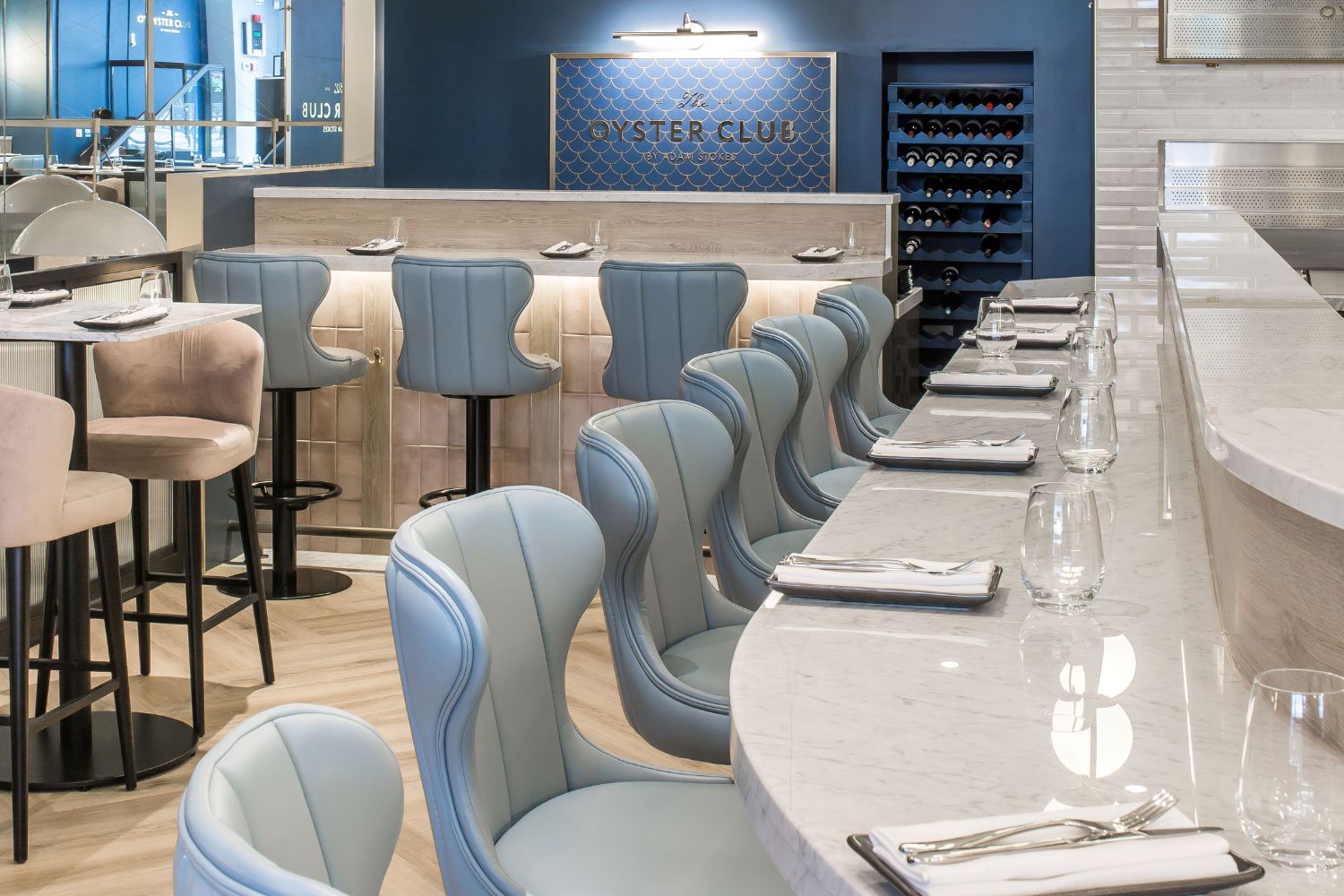
- Hospitality environments (hotels, restaurants, bars, cafes)
- Workplace and commercial offices
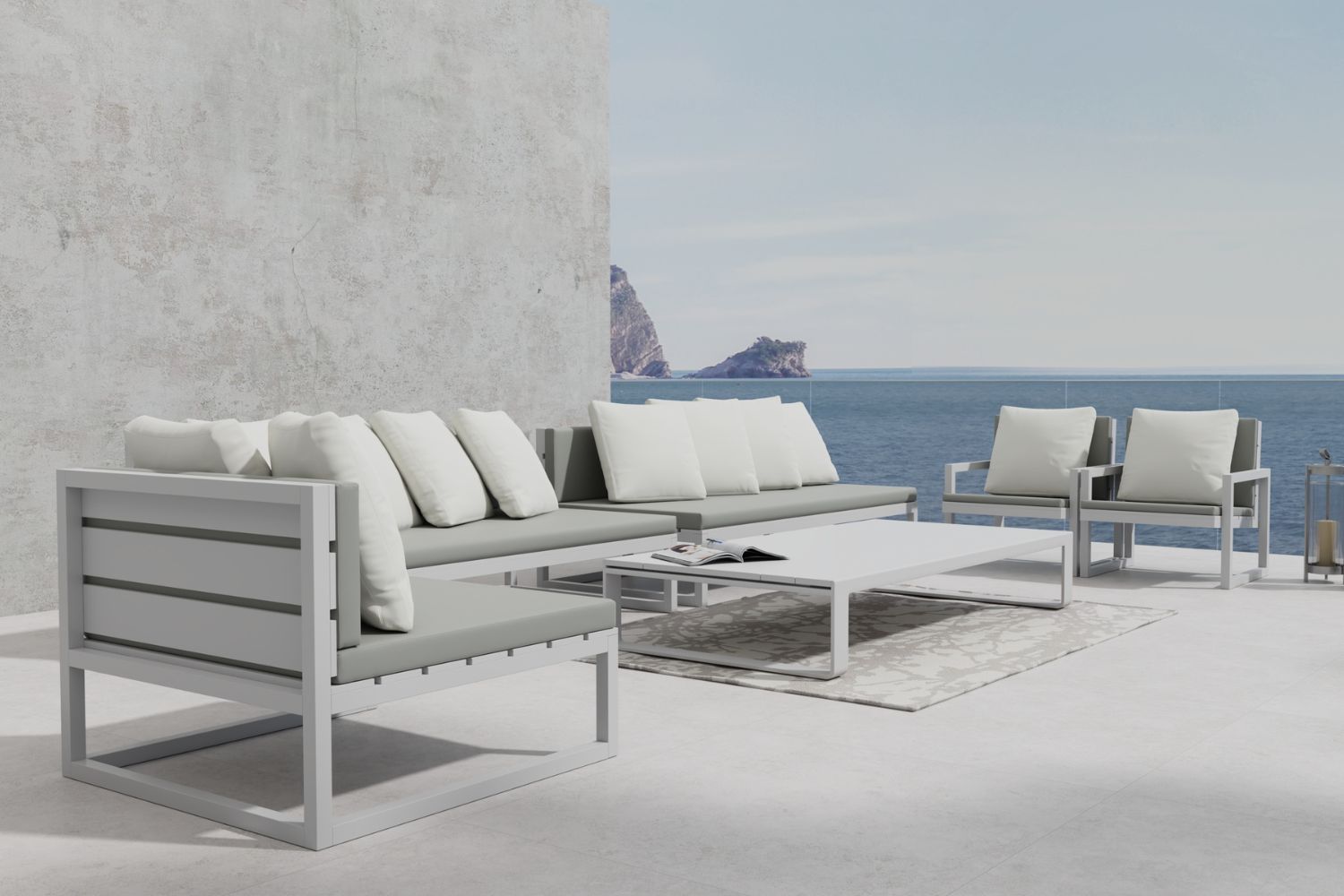
- Transport and aviation seating (yachts, cars, aeroplanes, and even spaceships)
Its combination of durability, comfort, and aesthetic versatility makes it a strong choice wherever performance and design need to work together.
For specifiers researching “best faux leather for commercial use” or “PU vs PVC upholstery”, Ultrafabrics offers a future-forward alternative that balances performance with design integrity.
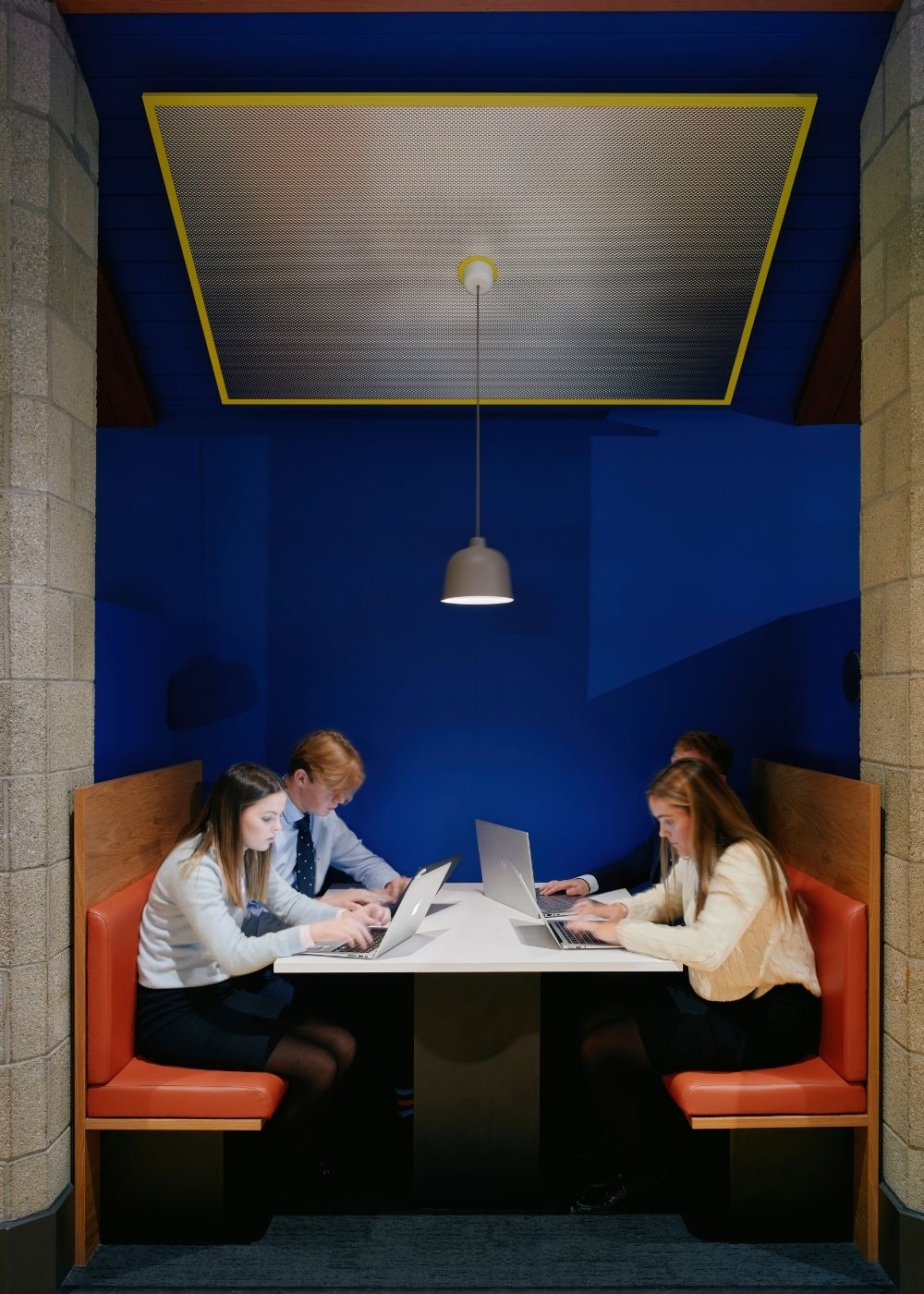
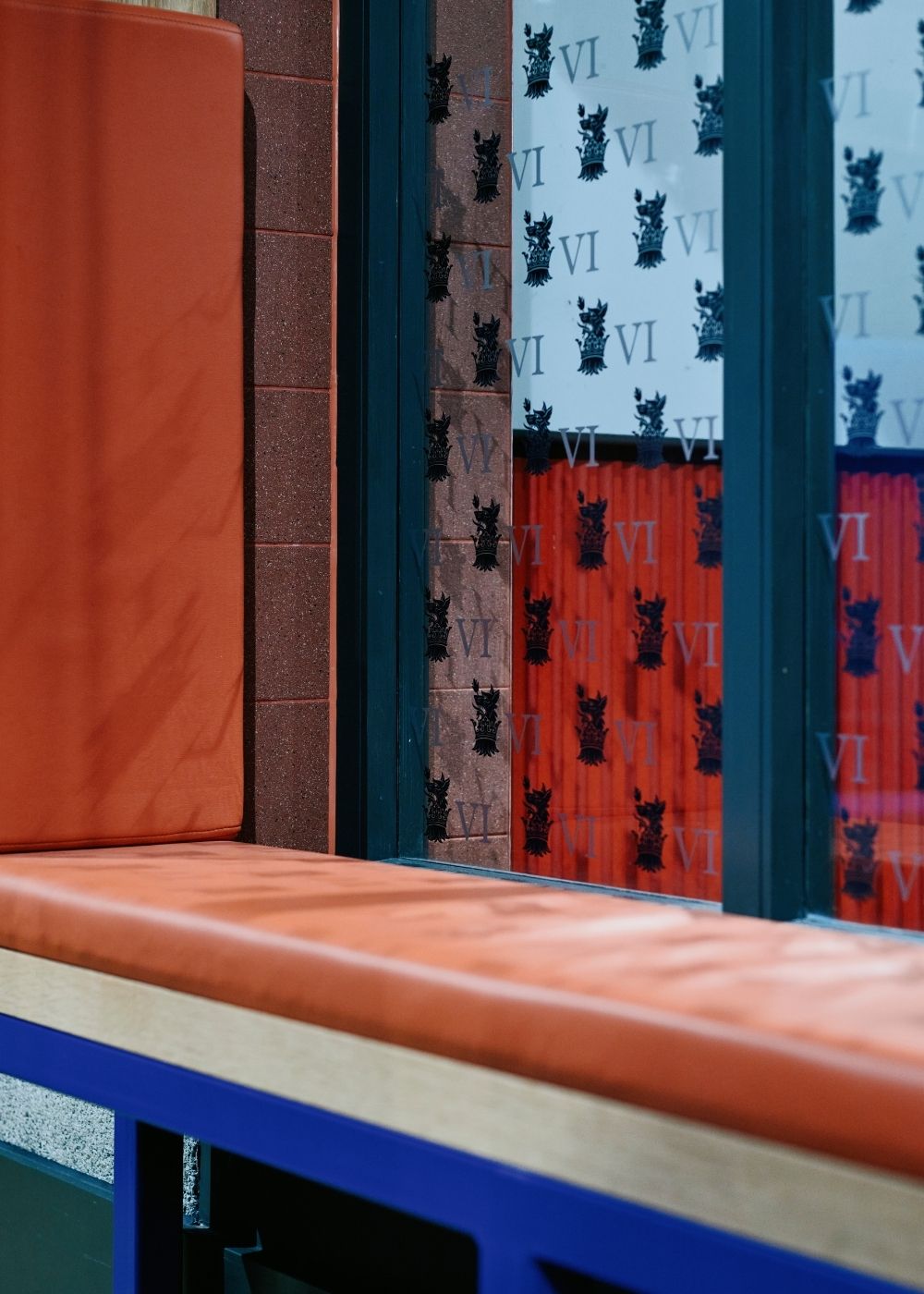
Specifying Ultrafabrics with Confidence
With increasing demand for high-performance, hydrolysis-resistant faux leather, Ultrafabrics continues to set a benchmark in the category.
Whether you’re designing for durability, comfort, or aesthetics, it provides:
- Proven long-term performance
- Elevated look and feel
- Versatility across sectors
How to purchase
Materialised is an expert is commercial faux leather and can guide you through product specification best for your brief and budget.
To see the Ultrafabrics range, contact your Project Sales Manager direct, or through our Customer Service team. The collection is showcased in all our Design Studios throughout Australia and New Zealand. And you can also order sampling online by logging in / requesting a trade account.
*Montage is manufactured in North America and has different specs to other designs in our range. Please refer to online specs.





About the Author: Catherine McGowan

Related posts